REBLOG: F-35 did well in Red Flag

Tämä on uudelleenblogaus ukdefensejournual.org.uk kirjoituksesta- Alkuperäisen voit lukea TÄÄLLÄ. Olisi mukava tietää kuinka voimakkaasti skriptattuja skenaariot ovat olleet. Toivottavasti on pyritty realistiseen sodankuvaan, eikä tukemaan F-35 vaikeaa myyntikampanjaa.

Mukana on hypetystä, mutta myös kovaa faktaa. Hypeä on se että tilannetietoisuus on parempi kuin 4. sukupolven koneissa. Ei aivan näinkään. Parempi kuin 30+ vuotta vanhoissa koneissa, joissa on parhaimmillaankin 1990-luvun tietotekniikkaa sisällä. Samaan tilannetitoisuuteen pystyvät kaikki HX-ohjelman koneet. Kovaa faktaa on, että IT (noin 1 GHz aluen taajuus) systeemejä vastaan optimoitu häivetekniikka toimii, on toiminut jo yli 25 vuotta.  

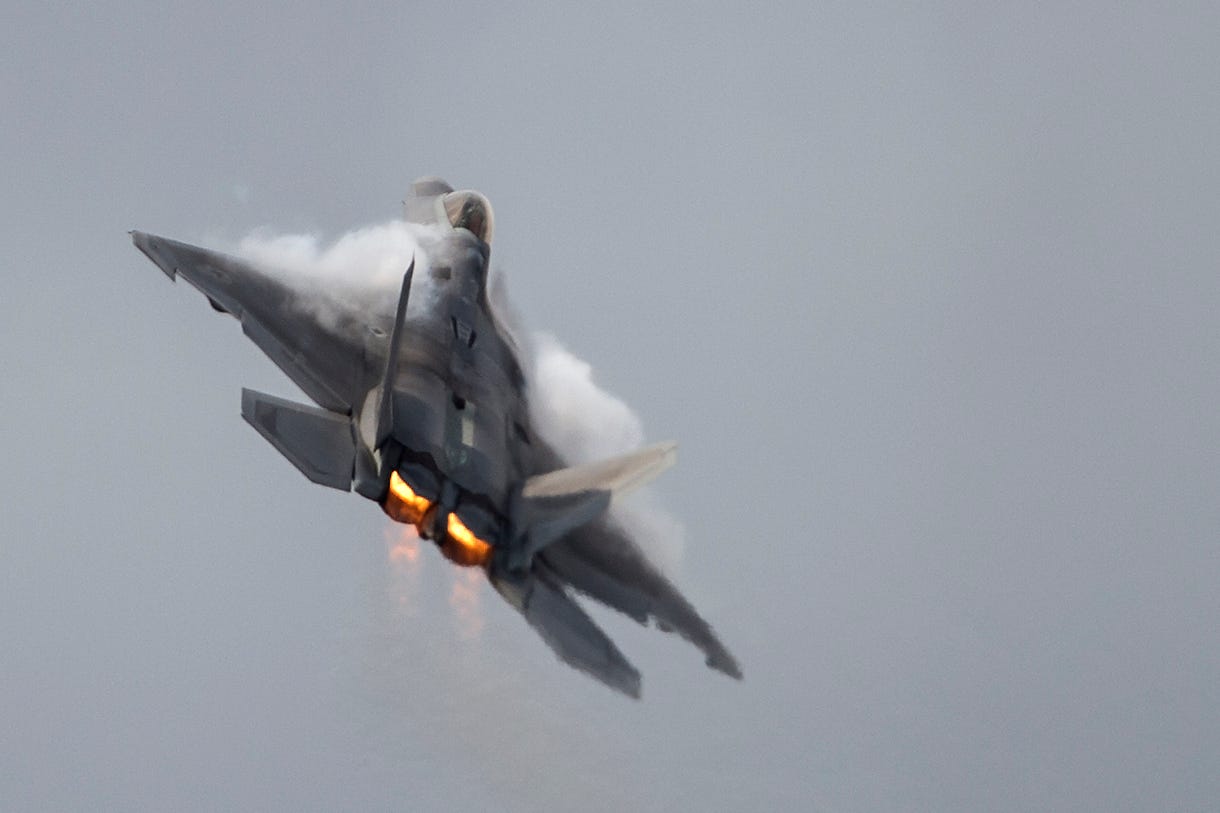
The reported performance of the F-35 is a major victory for an aircraft that was criticised for its cost and earlier developmental setbacks.

Earlier in the month it was reported that the F-35 had earned a 15:1 kill ratio against the aggressor squadron F-16s, more recent reports from the US Air Force and Lockheed Martin now put that ratio at 20:1.

An aggressor squadron is a squadron that is trained to act as an opposing force in military exercises.

Tech Sgt Robert James said about the jet:

“It’s giving the airmen something they never had before. It’s giving the maintainer information to help them do their job faster and easier while making the Air Force more streamlined.”

Along with the aforementioned kill ratio and maintenance rate, the jets executed unprecedented weapons targeting exercises.

James Schmidt, a former A-10 pilot said:

“I flew a mission the other day where our four-ship formation of F-35As destroyed five surface-to-air threats in a 15-minute period without being targeted once. It’s pretty cool to come back from a mission where we flew right over threats knowing they could never see us.

After almost every mission, we shake our heads and smile, saying ‘We can’t believe we just did that’. We flew right into the heart of the threat and were able to bring all of our jets back out with successful strikes. It’s like we hit the ‘I Believe’ button again after every sortie.”

Lt. Col. George Watkins, 34th Fighter Squadron commander, said flying the F-35A in combat feels like air dominance’.

“I’ve had four of my (F-35A) pilots come back from missions, guys who have flown the F-15 and F-16 at Red Flag for years, and tell me ‘This is amazing.

I’ve never had this much situational awareness while I’m in the air. I know who’s who, I know who’s being threatened, and I know where I need to go next.’ You just don’t have all of that information at once in fourth-generation platform.

The first day we were here, we flew defensive counter-air and we didn’t lose a single friendly aircraft. That’s unheard of. The number of adversaries has increased, their skill level has increased, the sophistication of the surface-to-air threat has increased.”

Royal Australian Air Force Group Captain Stuart Bellingham, Air Operations Center director at Red Flag said:

“It is a step up and a look into the future for us. It’s really exciting to work alongside the F-35A and the F-22 to understand how we best integrate that into a high end fight in the training scenarios that Red Flag provides.”

According to a press release:

“Since the exercise began, Hill’s Airmen have generated 110 sorties, including their first 10-jet F-35A sortie Jan. 30 and turned around and launched eight jets that afternoon. They have not lost a single sortie to a maintenance issue and have a 92 percent mission-capable rate, said 1st Lt. Devin Ferguson, assistant officer in charge of the 34th Aircraft Maintenance Unit. Legacy aircraft average 70 to 85 percent mission-capable.”

The Royal Air Force had also deployed Typhoon jets, Sentinel and Rivet Joint intelligence gathering aircraft and Voyager tankers to Exercise Red Flag.

In the words of the Ministry of Defence, “Red Flag pits ‘Blue’ coalition forces against hostile ‘Red Force’ aggressors, mirroring real-life threats in air-to-air, air-to-ground, space and cyber warfare.”

Typhoons, from 6 Squadron, RAF Lossiemouth, were operating in a swing-role capacity, fighting their way into hostile airspace, launching precision strikes on ground targets and fighting their way out again. A Voyager tanker and a Sentinel and Rivet Joint were also present.

The F-35 programme has gone through serious teething problems, problems also experienced by the majority of complex aircraft flying today such as the F-15, Typhoon or any other modern combat jet; it’s no secret however that the F-35 has had severe cost and schedule issues. The biggest issue for the project continues to be the fact it is the most expensive military weapons system in history owing to the sheer scope of the programme but that being said, aircraft costs are now coming down and will soon be similar to the cost of many aircraft it’s replacing.

Today the programme is maturing rapidly, right now much of the activity around the jet is dealing with software bugs and testing to validate the software, with most of the physical testing being to do with weapons integration and the gradual scaling up of capabilities that comes with each new software block.

The jet is a quantum leap in capability, able to give the pilot as much information as only theatre commanders have previously had. While the primary value of the jet is in its sensor and networking capabilities, it is also valuable in that it’s able to perform many tasks designed to increase the lethality of not only itself but other assets, such tasks include the ability to co-ordinate small fleets of unmanned combat aircraft, guide weapons launched from other platforms (even warships), launch a wide-range of its own weapons and use it’s own radar to conduct electronic attacks.

The F-35 will drastically increase the situational awareness and combat capabilities of the forces with which it will deploy and for the UK, where numbers may be a concern, it represents a fantastic way to enhance combat capability in any coalition or national effort. There is no denying that jet is overbudget and behind schedule compared to original estimates but an incredibly capable platform is emerging and one that I believe will shape the future of air combat.
Posted in Uncategorized | Leave a comment

Venäläiset aloittaisivat sotatoimet Norbottenissa parissa päivässä

Ruotsalainen kenraali oli ehtinyt kommentoimaan Suomen puolustusta viime viikolla. Iltasanomien juttu aiheesta ja MTVn kirjoitus samasta asiasta. Asiaa liippaa myös Hesarin juttu puolustusministeriön ja puolustusvoimien näkemyseroista maan puolustamisessa.  En epäile, etteikö Norrbottenin reunoja oltaisiin kolistelemassa kaksi päivää sen jälkeen, kun pilli on puhaltanut, tämä tietenkin saattaa hyvinkin pitää paikkaansa.   Toisaalta harvoin sodissa käy ihan niinkuin suunnitellaan, saattaahan siinä mennä 105kin päivää.

 Suomessa Blogosfäärissä on myös herätty asiaan. Tässä vastapainona nuoren vihreän Emil Sillanpään kirjoitus aiheesta. Ari Pesonen on asiasta vähän toista mieltä. Molemmilla kirjoittajilla on pointtinsa, mutta varsianaisia vastauksia he eivät kysymykseen “Mitä pitäisi tehdä?” anna. 

Ari Pesonen kiittelee Venäjän asevoimien nopeutta mobilisoida suuria yhtymiä ja siirtää niitä nopeasti alueelta toiselle. Pitää paikkaansa: Pihkovasta esimerkiksi löytyy erittäinkin nopeasti liikuteltava 76.  maahanlaskudivisioona sekä yksi erikoisjoukkojen prikaati. Tosin samanlainen prikaati löytyy myös kahdesti punalippuiselta Itämeren laivastolta. Eli hyvin vakavasti otettavien uhkien kanssa Suomessakin judutaan elämään. Siis Venäjä pystyy tekemään kymmenientuhansien sotilaitten niin sanottuja “äkki harjoituksia” tai “snap drillejä” periaatteessa Putinin päätöksellä muutaman hetken varoitusajalla.   Suomessa samanlainen kyky, noin 30 000 miehelle, jokaisena arkipäivänä. Viikonloput, puhumattakaan suurista juhlapyhistä, ovat paljon vaikeampi tilanne.  jos itse olisin havittele Suomenmaan haltuunottoa katsoisin ihan ensimäiseksi kuinka vappu ja juhannus sijoittuvat kalenterissa.  Jos vapun jälkeen on vielä viikonloppu, elikkä kolmen päivän viikonloppu kannattaisi hyökkäys töräyttää käyntiin vapun aamuna, kun kaikilla on tukka kipeänä ja silloin ei Suomessa tapahdu yhtikäs mitään.  Juhannus olisi yhtä varma juttu.  

Valmius on tietenkin paljon muutakin kuin varusmiehet kasarmissa. Eniten turvallisuutta on reserviläiset kotona. Jos Suomessa halutaan vakavasti varustautua hybridisodan aloittamisen ja yllätyshyökkäysten kaltaisiin uhkiin valmistautumista, niin meidän täytyy alkaa sijoittaa, Sveitsin tyyliin, sotilaille varusteet kotiin. Lyhyesti siis reserviläisille rynnäkkökiväärit tetsarit ja kolme tuliannosta patruunoita kotiin.

 Sisäiselle turvallisuudelle tämä ei ole mikään ongelma, ajattelen kaikkia laillisia aseita Suomessa, joita on sadoin tuhansin ja jonkun sveitsiläisen tutkimuslaitoksen mukaan miljoonin, ja joilla tehdään “noin yksi” väkivallanteko vuodessa. Tähän määrään 300 – 400 tuhtta rynnäkkökivääriä yksityisillä ei ole mikään ongelma. En ole nähnyt 30-luvun ja 20 luvun tilastoja suojeluskunta-aseella tehtyjen murhien, tappojen ja muitten väkivallantekojen osalta mutta ei suojeluskuntaaseita silloinkaan minään ongelmana pidetty.  Todisteena tilanteen ongelmattomuudesta voin antaa sen, että ampumaaselaki säädettiin tasavaltaan vasta vuonna 1932. Sitä ennen Suomeen sai vapaasti tuoda vaikkapa konepistooleja USAsta. Ongelma Suojeluskunta aseet ovat olleet vain muualle Josef Stalin-nimiselle herralle ja hänen kätyreilleen ja hengenheimolaisilleen Suomessa.

Edelläkerrotun lisäksi voisi paria muutakin paranusta tehdä: Suomeen tarvitaan myös maavoimiin ammattilaiskomponentti. Siis käytännössä värvättyä nuorta väkeä sen minkä nuorisotyöttömyys kestää. Jos Ruotsin ongelmat värväyksessä materialisoituisivat myös täällä, voitaisiin noin kahteen prikaatiin, siis reiluun 10 000 ammattilaiseen. Nämä olisivat aivan yhtä tehokkaasti ja nopeasti siirrettäviä joukkoja, kuin Venäläisetkin, ja joilla voidaan suojata joko tärkeitä kohteita tai muuta liikekannallepanoa.

Toisekseen Suomessa tarvitaan paljon enemmän kertausharjoituksia. Nykylainsäädäntö mahdollistaa, esimerkiksi perus kiväärimiehelle, 40 vuorokautta kertausharjoituksia sen noin 20 vuoden aikana kun reservissä ruukataan olla.  Enpä tiedä ketään, joka olisi ne loppuun käyttänyt kovissa PVn harjoituksissa. Tietenkin asia erikseen ne kaverit, jotka harrastavat maanpuolustustyötä. sellaisille saattaa tulla yksi 50 vuorokautta kertauksia vuodessa.  Siis niin, että voit laskea niin, että joka toinen vuosi on noin 5 vrk kertaus. Tietenkin Ups ja AUt samaan tapaan omien systeemiensä mukaan.

Kolmantena sitten maakuntakomppanioitten kasvattaminen pikkuhiljaa “maakunta pataljooniksi” ja edelleen “Maakunta taisteluosastoiksi” Kaikkine rakkineineen aina tiedustelulennokeista kenttätykistöpatteristoon saakka.
Edelleen, kannattaisi myös harkita systeemiä, joissa harjoituksiin osallistumisesta, siis puhuttaessa MPKn vapaaehtoisista harjoituksista. Korvaus osallistumisesta olisi ihan kunnollinen. Ei niin, että isänmaalliset miehet ja naiset maksavat siitä, että menevät palvelemaan maataan vaan, suurinpiirtein Ruotsin systeemin mukaan että taaloja suorastaan vilisee silmissä ja yhden päivän palkka on 50-70 euroa.  

Siinäpä on teille  keinot valmiina miten ruotsalaiset kenraalit saavat nukkua rauhassa. Mutta kyllä minä pelkään, että ei nykyinen hallitus, eikä mikään muukaan hallitus, tälle asialle mitään tee.

Posted in hybridisota, informaatiosota, Sodanajan joukot, Sodanajan toiminta, Suomi ja Ruotsi, Tilanne päällä, varusteet | Tagged , | Leave a comment

#eugunban seems to be still going forward

Few within the hunting and sport shooting community have failed to miss that the stand in Brussels regarding EU´s Firearms Directive seems to be a lost cause, at least at a European level. Anna Maria Corazza-Bildt (MP) voted for the compromise in IMCO since she claimed that it would not prove a threat towards the […]

via Laws are for the law abiding in today´s Sweden — blickovernejden

Posted in henk.koht, sisäinen turvallisuus | Leave a comment

The day at range in Seinäjoki, courtecy of EF-security

wp-1485522116171.jpeg

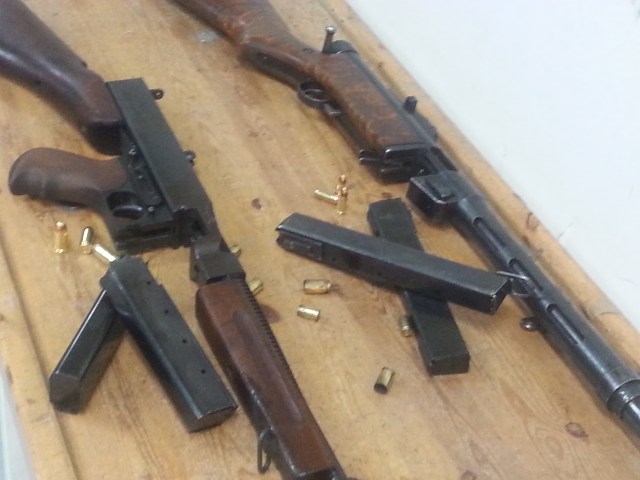
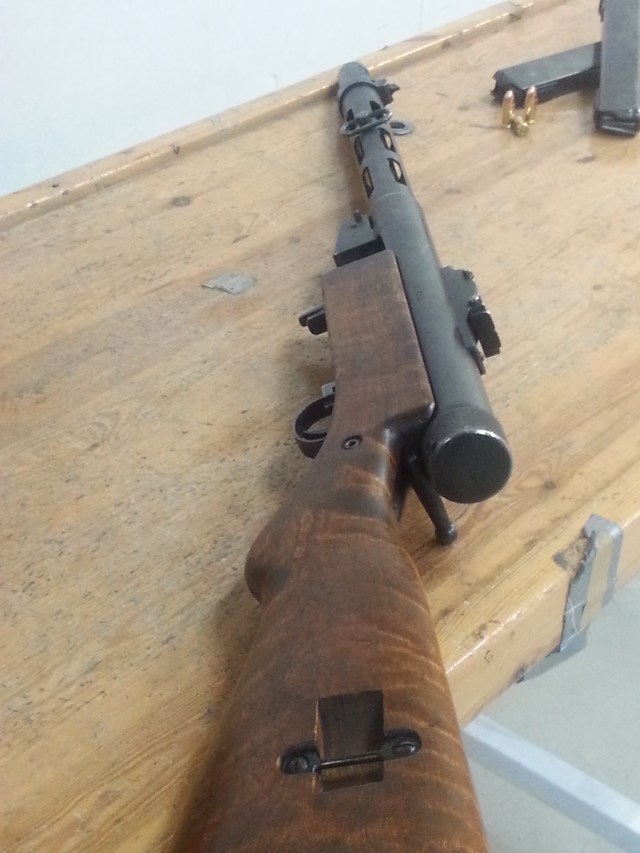
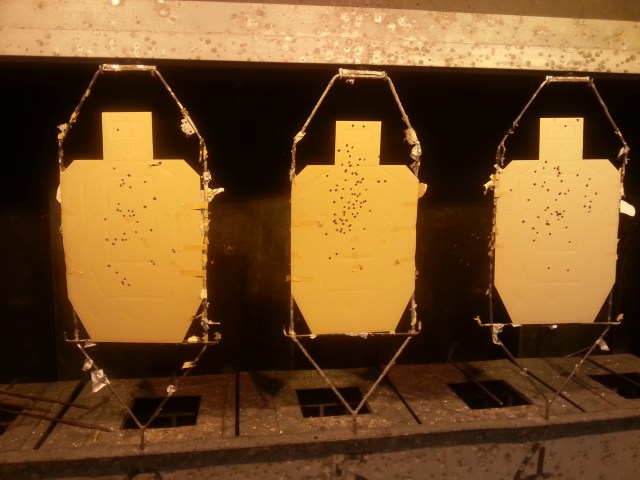
As you can see from the cardboards after punishment, both guns are extremely controllable, and thus premiere SMGs of WW II

I had to the distinct pleasure of being invited to Nurmo shooting range by the XO  of the EF-security gun store.  Even though I now a days live quite far away from, 650km, form   Seinäjoki it still is “sort of”my hometown and that is why I like to do business with the local gun store. (And Unfortunately Rovaniemi doesn’t have a same kind of gun store) the proprietor was kind enough to invite me to try out couple of submachine guns and P-38 pistol in the indoor range in the town.  I had never before beheld or touched the Thompson  SMG and it has been about  30 years since I have been shooting with the Finnish sub machine gun model 31, or more familiarly, Suomi machine pistol.

wp-1485522147613.jpeg

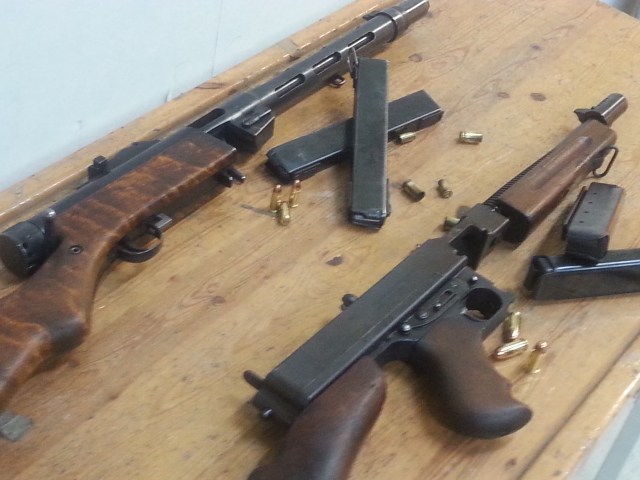
Suomi Kp-31 and Thompson SMG side by side. Only PPsh-41 is missing from the “Best SMGs of the war” photo.

Both of the guns where in excellent condition as you can see from the pictures, and they see quite a lot of use as recreational shooting guns for the EF-Security business. If you want to go shoot while you are staying in Seinäjoki you can to book an appointment with Tommi in EF security. They have a nice selection of FA and SA guns you can try out.

wp-1485522188006.jpeg

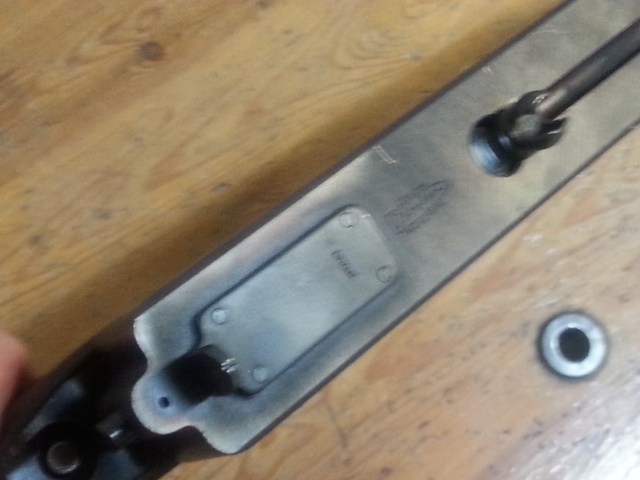
And from the business end of things. As you can see the guns are about the same size.

What I know previously about Thompson SMG led me to expect somewhat higher recoil than from a 9 millimeter rounds. As the .45 ACP round this both bigger and heavier than a 9 mm.  But it proved that both guns are quite easy to handle and easy enough to shoot accurately when you limited yourself into controlled, short bursts.  As I mentioned it has been a while since I last shot Full Auto, so I didn’t try full rock and roll to targets. Whit a little of getting used to you could manage a single round in FA action because of Thompson’s bit lower cyclic rate of fire (about 600).  This proved to be quite impossible with the Suomi SMG (Suomi’s cyclic rate is about 900). Best I could manage was about two to three round burst with it which was extremely controllable. You can see Full Auto shooting here, by yours truly.wp-1485522337656.jpeg

Neither of the gun had drum magazines but the Thompsons 20-round magazines we’re a bit short for my thinking because if you think of how you want to use an SMG you want to have a what cut of suppression capability and as I mentioned the controllable gun but 20 grounds is quite small amount to go to fight with.  A drum mag of 50 rounds will help with this. But of course I do realize that in Wartime use that Thompson had much larger magazines available. Suomis had the “small” 36 rounders with them. There would also be coffin shaped 50 and drum 70 mags available, but I was quite happy with the 36 rounders. 

wp-1485522361886.jpeg

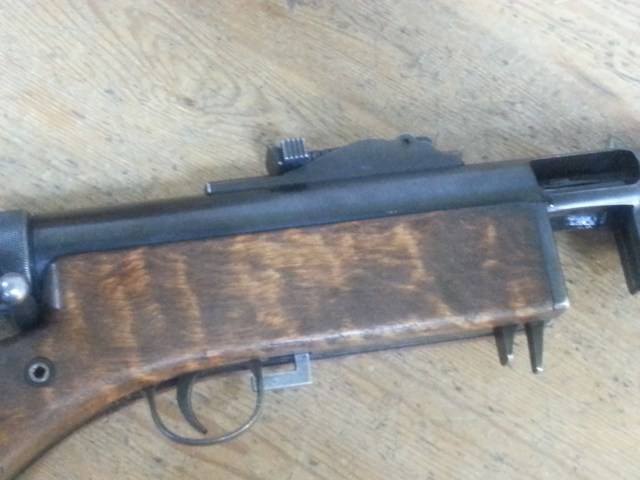
Suomi’s controls: The little “L” shaped lever is the safety and selector Safe-SA-FA. Now on FA.

So I liked both guns a lot, both were stable platforms to shoot and you could see the “Olde World” manufacturing, materials and machining in both guns. The were still in exellent shape,   which most “modern” designs would not after 70 years and >30k of rounds shot would not be. You gotta appreciate the old steel here! Weight of the guns, and of course the girth of yours truly, make these stable to shoot. I guess lighter individual might have trouble with shooting, but any normal size guy should not experience any difficulties.

wp-1485522227602.jpeg

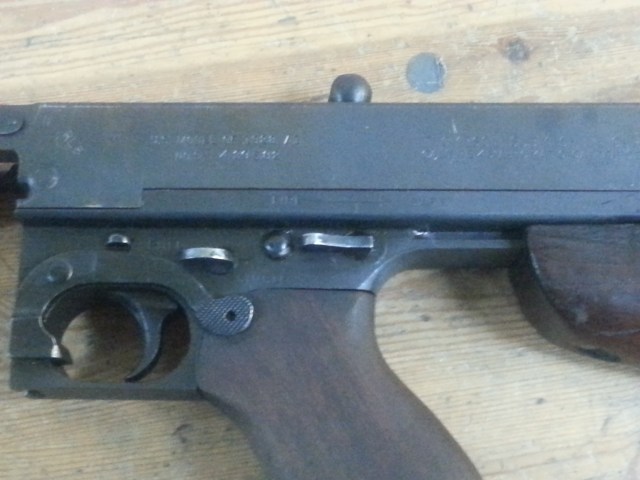
Funny feature in Thompson is the “perforated” charging lever.

Tommi told me that before the Finland’s first gun law in 1932 quite a few wealthy Suojeluskunta (Home guard) men imported the Thompson SMGs to Finland for their own use. Suomi wasn’t around untill 1930ies and Thompsons first use was 1919, and were freely available. Many well of guys wanted to have a nice SMG for their mome guard weapons so you had a market, and markets tend to fill. This is why there are still quite a few Thompson submachine guns in circulation in Finland.wp-1485522278261.jpeg

I do apologize the quality of photos. Didn’t have camera with me so Samsung Galaxy S III had to do the trick. And it seems there is something wrong with my example.

Posted in Aseet, Aselait | Tagged , , , , , , , , | Leave a comment

REBLOG: Bryssel is wrong on guns

This is a reblog of Wall street Journual’s piece on 25.1.2017. It is written by John R. Lott jr. Link to the original HERE

Strict new European gun-control regulations will take another step on Thursday when a committee of the European Parliament votes on a set of measures. The Parliament and the European Commission already have agreed to the proposal in principle. Prompted by terrorist attacks in Paris and Copenhagen, these regulations would prohibit the civilian use of most semiautomatic firearms. As is typical of such laws, however, they will do nothing to prevent the kind of attacks being used to justify them.

The proposed Firearms Directive would, among other things, ban various semiautomatic guns and magazines greater than 10 or 20 rounds, depending on the length of the gun. The goal appears to be to ban semiautomatic guns that can “easily be converted” to automatic weapons.

But the directive completely misunderstands how guns work. Semiautomatic guns can’t be easily converted into machine guns. The firing mechanisms are different.

Semiautomatic weapons fire only one bullet with each pull of the trigger and then reload themselves, making them good for self-defense. With a single-shot rifle that requires the user to manually reload, you could be in trouble if you miss your first shot or are faced by multiple attackers.

High-capacity magazines, regardless of any ban, can be made with very simple tools or mass-produced with 3-D printers. Another way around the ban would be to use multiple guns, which killers in terror attacks often do.

None of these bans would hinder a determined terrorist. The eight who attacked various sites in Paris in November 2015 were armed with automatic AK-47s and explosive suicide belts. The February 2015 Copenhagen attack was carried out with an automatic M95 assault rifle. In the January 2015 attack on Charlie Hebdo and a kosher supermarket in Paris, the terrorists were armed with automatic Kalashnikov rifles, a loaded M42 rocket launcher, semiautomatic handguns, smoke grenades, Molotov cocktails, a hand grenade and sticks of dynamite. All the weapons used in these attacks were already illegal.

The proposed regulation is similar to the U.S. Federal Assault Weapons Ban President Bill Clinton signed into law in 1994. Criminologists and economists have found no evidence that the U.S. ban reduced either ordinary gun crime or mass public shootings. In 1997, criminology professors Christopher Koper and Jeffrey Roth hired by the Clinton administration wrote, “The evidence is not strong enough for us to conclude that there was any meaningful effect (i.e., that the effect was different from zero).”

Seven years later, Messrs. Koper and Roth, with fellow criminologist Daniel Woods, published a follow-up study for the U.S. National Institute of Justice and concluded, “There has been no discernible reduction in the lethality and injuriousness of gun violence.”

A better idea would be to allow and hopefully mandate off-duty police and military personnel to carry concealed handguns. Jesse Hughes, the lead singer for the band performing at Paris’s Bataclan Theater that November night in 2015 when 89 people were killed, has said that eight off-duty officers were in attendance that night as part of the audience. Had these officers had their firearms, the outcome might have been very different.

But France at the time limited the ability of off-duty officers to carry concealed guns. Belgium, Denmark and other EU member countries don’t allow concealed carry by off-duty police officers or soldiers, as if these dedicated men and women aren’t to be trusted as soon as they leave work.

Off-duty officers will almost certainly find themselves at the center of an attack again. It would be foolish to refuse the free protection that so many of them want to provide.

Mr. Lott is the president of the Crime Prevention Research Center and the author of “The War on Guns” (Regnery 2016).

Posted in Aseet, Aselait, sisäinen turvallisuus | Tagged , , | Leave a comment

EUn asekielto läpi IMCOssa

Eli EU teki Suomen puolustamiseen mitä suurimmassa määrin liittyvän päätöksen laittamalla äänin 25-9 EUn asekiellon eteenpäin.

Nyt on aika laittaa käyntiin FIXit.

Posted in Uncategorized | 1 Comment

#eugunban goes forth

So it seems that IMCO voted in support of EU’s gun ban 25-9 two abstained.

Posted in Uncategorized | Leave a comment

Now HOW to kill a Stealt fighter

This a reblog of War is boring Blog. It was so thought provoking I decided to reblog it. Enjoy.

Suomeksi: bloki esittelee kuinka löytää ja tuhota häivehävittäjiä: Laitetan tutkia sopivasti hajalleen, jolloin ne välttämättä saavat kaiun häivekoneesta ja ammutaan ne sitten alas pitkänkantaman ohjuksilla. Periaatteessa siis.

The Not-So-Secret Way to Kill a Stealth Fighter

Combine phased array radars with big missiles

by DAVE MAJUMDAR

The United States has poured tens of billions of dollars into developing fifth-generation stealth fighters such as the Lockheed Martin F-22 Raptor and F-35 Joint Strike Fighter.

However, relatively simple signal processing enhancements, combined with a missile with a large warhead and its own terminal guidance system, could potentially allow low-frequency radars and such weapons systems to target and fire on the latest generation U.S. aircraft.

It is a well-known fact within Pentagon and industry circles that low-frequency radars operating in the VHF and UHF bands can detect and tracklow-observable aircraft. It has generally been held that such radars can’t guide a missile onto a target — i.e. generate a “weapons quality” track.

But that is not exactly correct — there are ways to get around the problem according to some experts.

Traditionally, guiding weapons with low frequency radars has been limited by two factors. One factor is the width of the radar beam, while the second is the width of the radar pulse, but both limitations can be overcome with signal processing.

The width of the beam is directly related to the design of the antenna — which is necessarily large because of the low frequencies involved. Early low-frequency radars such as the Soviet-built P-14 Tall King VHF-band radars were enormous in size and used a semi-parabolic shape to limit the width of the beam.

Later radars including the P-18 Spoon Rest used a Yagi-Uda array — which were lighter and somewhat smaller. But these early low frequency radars had some serious limitations in determining the range and the precise direction of a contact.

Furthermore, they could not determine altitude because the radar beams produced by these systems are several degrees wide in azimuth and tens of degrees wide in elevation.

An F-22 Raptor on July 29, 2016. U.S. Air Force photo

Another traditional limitation of VHF and UHF-band radars is that their pulse width is long and they have a low pulse repetition frequency, which means such systems are poor at accurately determining range.

As Mike Pietrucha, a former Air Force electronic warfare officer who flew on the McDonnell Douglas F-4G Wild Weasel and Boeing F-15E Strike Eagle once described to me, a pulse width of 20 microseconds yields a pulse that is roughly 19,600 feet long — range resolution is half the length of that pulse. That means that range can’t be determined accurately within 10,000 feet.

Furthermore, two targets near one another can’t be distinguished as separate contacts.

Signal processing partially solved the range resolution problem as early as the 1970s. The key is a process called frequency modulation on pulse, which is used to compress a radar pulse. The advantage of using pulse compression is that with a 20-microsecond pulse, the range resolution is reduced to around 180 feet or so.

There are also several other techniques that can be used to compress a radar pulse such as phase shift keying. Indeed, according to Pietrucha, the technology for pulse compression is decades old and was taught to Air Force electronic warfare officers during the 1980s.

The computer processing power required for this is negligible by current standards, Pietrucha said.

Engineers solved the problem of directional or azimuth resolution by using phased array radar designs, which dispensed with the need for a parabolic array. Unlike older mechanically scanned arrays, phased array radars steer their radar beams electronically. Such radars can generate multiple beams and can shape those beams for width, sweep rate and other characteristics.

The necessary computing power to accomplish that task was available in the late 1970s for what eventually became the Navy’s Aegis combat system found on the Ticonderoga-class cruisers and Arleigh Burke-class destroyers. An active electronically scanned array is better still, being even more precise.

With a missile warhead large enough, the range resolution does not have to be precise. For example, the now antiquated Russian-made S-75 Dvina — known in NATO parlance as the SA-2 Guideline — has a 440-pound warhead with a lethal radius of more than 100 feet.

Thus, a notional 20-microsecond compressed pulse with a range resolution of 150 feet should have the range resolution to get the warhead close enough, according to Pietrucha’s theory.

The directional and elevation resolution would have to be similar with an angular resolution of roughly 0.3 degrees for a target at 30 nautical miles because the launching radar is the only system guiding the SA-2.

For example, a missile equipped with its own sensor — perhaps an infrared sensor with a scan volume of a cubic kilometer — would be an even more dangerous foe against an F-22 or F-35.

This article originally appeared at The National Interest.

Posted in elektroniikka, simulaatio, Sotapelit, teknologia | Tagged , | Leave a comment

IltaLehden eilinen kartta Suomesta

Eilisessä iltalehdessä oli kartta, ja juttua jossa näkyy kummia: Venäjän puolustusvoimien näkemyksiä hyökkäyksestä kohti länttä että voidaan auttaa merisotaa pohjoisilla vesillä. (Linkki juttuun). Venäjälle GIUK aukko ja sitä ympäröivät vedet ovat tärkeitä koska:

  • NATOn kuuntelulinja sijaitsee täällä, Tällä NATO koettaa mahdollistaa aikaisen Venäjän (ja aikaisemmin NLn) hyökkäysveneiden löytämisen, ennekuin ne pääsevät hyökkäämään saattueiden kimppuun Atlantilla. NATO toisi pohjoisamerikasta paljon miehistöä ja ennekaikkea materiaalia Eurooppaan suursotaan valmistautuessaan. On paljon helpompaa upottaa Ps-divisioona kuin tuhota se maatasitelussa nääs.
  • Toisaalta Venäjä haluaa suojella Meribastionia suurinpiirtein Kuolan-Valkoisen meren alueeella. Alueella siis toimivat Venäjän ohjusveneet, niihin ei saa päästää NATOn hyökkäysveneitä käsiksi.

Suorin reitti GIUK kylkeen sattuu menemään Alakurtista-Kemijärvi-Rovaniemi-Tornio-Kalix-Luulaja kautta Tromssan tienoille. Tästä kannattaa lukea enemmänkin vuonna 2014 ilmestyneestä USAn puolustusministeiön opuksesta Northwestern TVD and Soviet operational Starategic planning. *.Pdf luettavissa TÄÄLLÄ. Kirjoittaja varoittaa että ajat ovat muuttuneet, mutta ILn kartta osoittaa että eivätpä suunnitelmat ja suunnitelun realiteetit ainakaan kovin paljon.

Tämä asia lienee yksi niistä syistä miksi Leopard II A4 vaunut ovat nyt kotiutuneet Sodankylään Ylen Juttu. Ei yksi vaunujoukkue kesää tee, mutta ilmeisesti katsotaan, että alueen puolustaminen vaatii avukseen myös panssareita. Muutenhan hyökkäysurana Alakurtti-K:järvi- Rovaniemi-(Yli)Tornio on hyökkääjälle painajaismainen. Tie kulkee suurimmalta osalta kapealla kannaksella soiden ja vesistöjen välissä. Maasto on rikkonaista, ja Rovajärven alue PVn ja paikallisten reserviläsiten paremmin kuin erittäin hyvin tuntemaa. Jokilinjat ovat leveitä ja joet lisäksi virtaavat nopeasti. Suomalaisilla on on paljon epäsuoraa tulta, jolla voidaan vaikuttaa pitkältä matkalta  ja aiheuttaa vakavia erityisajoneuvojen ja pioneerien tappioita. Not nice siis.

Eli vaikka se nyt kartalta satuttiin huomaamaan, niin ei se mikään uusi asia ollut.


Posted in armeija, Buildup to war, hypoteesitilanne, informaatiosota, Reserviläiset, Sodanajan joukot, Sodanajan toiminta, Sotapelit, Suomi ja Ruotsi, Tilanne päällä, uhka-arvio, voimapolitiikka | Tagged , , , , , , , , | Leave a comment

Stug-III in video

Finnish Evening paper Ilta-Sanomat has released a bit “World Of Tanks” video. You can see it HERE. It is of course in Finnish.

Basically it just tells you how good a tank killer Stug-III was in Finnish front. We lost 8 and at the same time StuG’s killed 87 tanks. Even tough the Germans thought StuG III obsolescent, it was still very viable in Finnish environment: It could kill even the heaviest of tanks in General Finnish combat ranges (up to 500m). It was light and pretty mobile and had decent armor.

Waiting for WOT to make a trip to Finnish armor museum in Hämeenlinna.

Posted in Aseet ja varusteet, Historia | Tagged , , | Leave a comment