#eugunban seems to be still going forward

Few within the hunting and sport shooting community have failed to miss that the stand in Brussels regarding EU´s Firearms Directive seems to be a lost cause, at least at a European level. Anna Maria Corazza-Bildt (MP) voted for the compromise in IMCO since she claimed that it would not prove a threat towards the […]

via Laws are for the law abiding in today´s Sweden — blickovernejden

Posted in henk.koht, sisäinen turvallisuus | Leave a comment

The day at range in Seinäjoki, courtecy of EF-security

wp-1485522116171.jpeg

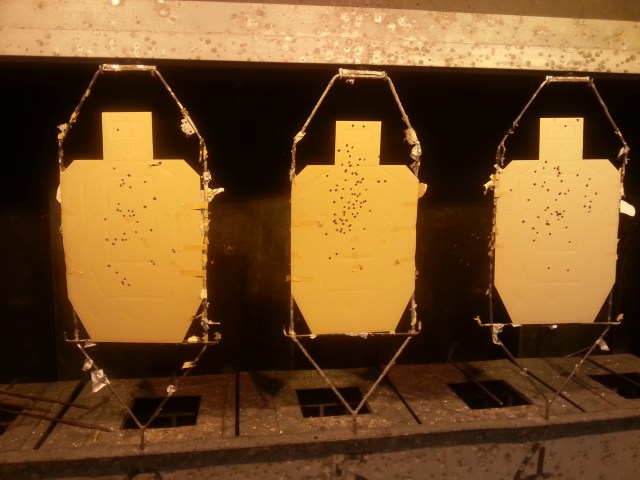
As you can see from the cardboards after punishment, both guns are extremely controllable, and thus premiere SMGs of WW II

I had to the distinct pleasure of being invited to Nurmo shooting range by the XO  of the EF-security gun store.  Even though I now a days live quite far away from, 650km, form   Seinäjoki it still is “sort of”my hometown and that is why I like to do business with the local gun store. (And Unfortunately Rovaniemi doesn’t have a same kind of gun store) the proprietor was kind enough to invite me to try out couple of submachine guns and P-38 pistol in the indoor range in the town.  I had never before beheld or touched the Thompson  SMG and it has been about  30 years since I have been shooting with the Finnish sub machine gun model 31, or more familiarly, Suomi machine pistol.

wp-1485522147613.jpeg

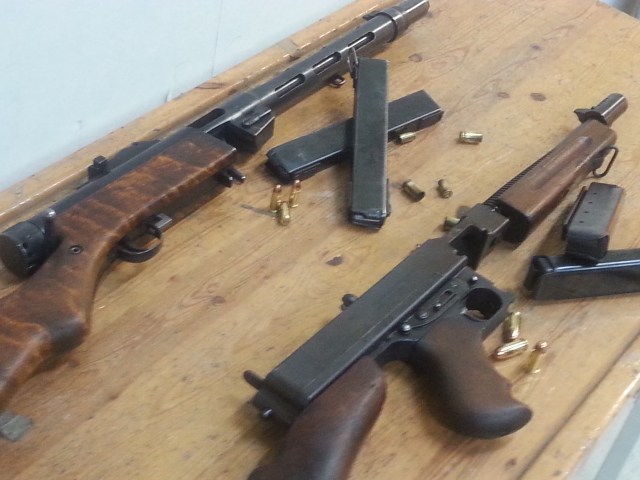
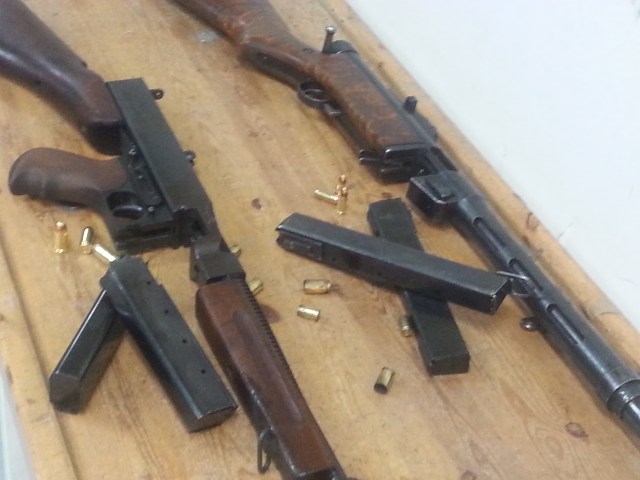
Suomi Kp-31 and Thompson SMG side by side. Only PPsh-41 is missing from the “Best SMGs of the war” photo.

Both of the guns where in excellent condition as you can see from the pictures, and they see quite a lot of use as recreational shooting guns for the EF-Security business. If you want to go shoot while you are staying in Seinäjoki you can to book an appointment with Tommi in EF security. They have a nice selection of FA and SA guns you can try out.

wp-1485522188006.jpeg

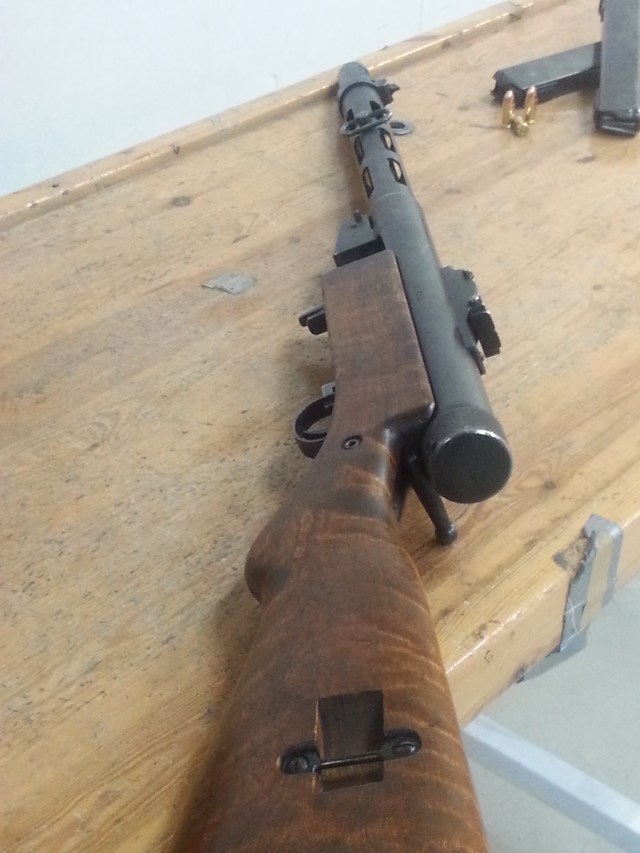
And from the business end of things. As you can see the guns are about the same size.

What I know previously about Thompson SMG led me to expect somewhat higher recoil than from a 9 millimeter rounds. As the .45 ACP round this both bigger and heavier than a 9 mm.  But it proved that both guns are quite easy to handle and easy enough to shoot accurately when you limited yourself into controlled, short bursts.  As I mentioned it has been a while since I last shot Full Auto, so I didn’t try full rock and roll to targets. Whit a little of getting used to you could manage a single round in FA action because of Thompson’s bit lower cyclic rate of fire (about 600).  This proved to be quite impossible with the Suomi SMG (Suomi’s cyclic rate is about 900). Best I could manage was about two to three round burst with it which was extremely controllable. You can see Full Auto shooting here, by yours truly.wp-1485522337656.jpeg

Neither of the gun had drum magazines but the Thompsons 20-round magazines we’re a bit short for my thinking because if you think of how you want to use an SMG you want to have a what cut of suppression capability and as I mentioned the controllable gun but 20 grounds is quite small amount to go to fight with.  A drum mag of 50 rounds will help with this. But of course I do realize that in Wartime use that Thompson had much larger magazines available. Suomis had the “small” 36 rounders with them. There would also be coffin shaped 50 and drum 70 mags available, but I was quite happy with the 36 rounders. 

wp-1485522361886.jpeg

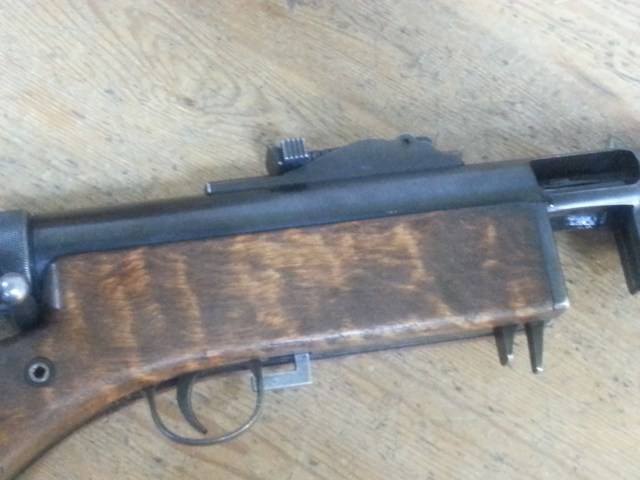
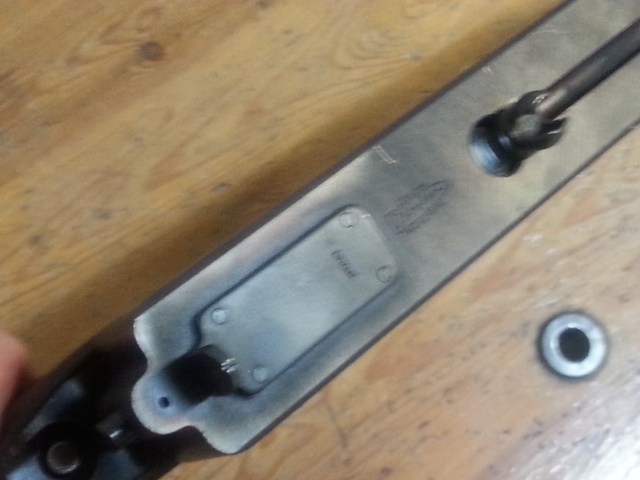
Suomi’s controls: The little “L” shaped lever is the safety and selector Safe-SA-FA. Now on FA.

So I liked both guns a lot, both were stable platforms to shoot and you could see the “Olde World” manufacturing, materials and machining in both guns. The were still in exellent shape,   which most “modern” designs would not after 70 years and >30k of rounds shot would not be. You gotta appreciate the old steel here! Weight of the guns, and of course the girth of yours truly, make these stable to shoot. I guess lighter individual might have trouble with shooting, but any normal size guy should not experience any difficulties.

wp-1485522227602.jpeg

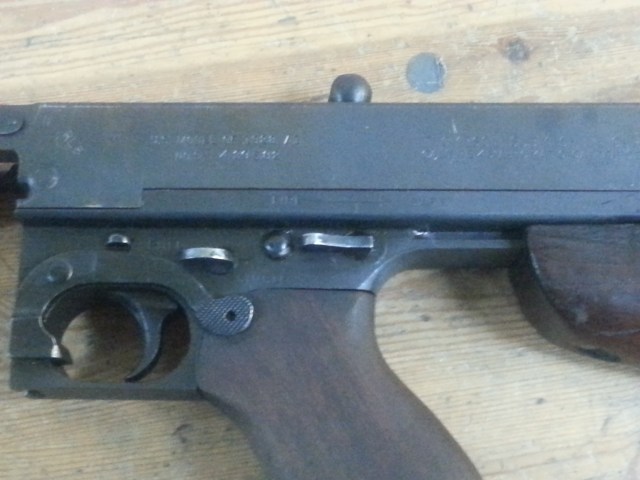
Funny feature in Thompson is the “perforated” charging lever.

Tommi told me that before the Finland’s first gun law in 1932 quite a few wealthy Suojeluskunta (Home guard) men imported the Thompson SMGs to Finland for their own use. Suomi wasn’t around untill 1930ies and Thompsons first use was 1919, and were freely available. Many well of guys wanted to have a nice SMG for their mome guard weapons so you had a market, and markets tend to fill. This is why there are still quite a few Thompson submachine guns in circulation in Finland.wp-1485522278261.jpeg

I do apologize the quality of photos. Didn’t have camera with me so Samsung Galaxy S III had to do the trick. And it seems there is something wrong with my example.

Posted in Aseet, Aselait | Tagged , , , , , , , , | Leave a comment

REBLOG: Bryssel is wrong on guns

This is a reblog of Wall street Journual’s piece on 25.1.2017. It is written by John R. Lott jr. Link to the original HERE

Strict new European gun-control regulations will take another step on Thursday when a committee of the European Parliament votes on a set of measures. The Parliament and the European Commission already have agreed to the proposal in principle. Prompted by terrorist attacks in Paris and Copenhagen, these regulations would prohibit the civilian use of most semiautomatic firearms. As is typical of such laws, however, they will do nothing to prevent the kind of attacks being used to justify them.

The proposed Firearms Directive would, among other things, ban various semiautomatic guns and magazines greater than 10 or 20 rounds, depending on the length of the gun. The goal appears to be to ban semiautomatic guns that can “easily be converted” to automatic weapons.

But the directive completely misunderstands how guns work. Semiautomatic guns can’t be easily converted into machine guns. The firing mechanisms are different.

Semiautomatic weapons fire only one bullet with each pull of the trigger and then reload themselves, making them good for self-defense. With a single-shot rifle that requires the user to manually reload, you could be in trouble if you miss your first shot or are faced by multiple attackers.

High-capacity magazines, regardless of any ban, can be made with very simple tools or mass-produced with 3-D printers. Another way around the ban would be to use multiple guns, which killers in terror attacks often do.

None of these bans would hinder a determined terrorist. The eight who attacked various sites in Paris in November 2015 were armed with automatic AK-47s and explosive suicide belts. The February 2015 Copenhagen attack was carried out with an automatic M95 assault rifle. In the January 2015 attack on Charlie Hebdo and a kosher supermarket in Paris, the terrorists were armed with automatic Kalashnikov rifles, a loaded M42 rocket launcher, semiautomatic handguns, smoke grenades, Molotov cocktails, a hand grenade and sticks of dynamite. All the weapons used in these attacks were already illegal.

The proposed regulation is similar to the U.S. Federal Assault Weapons Ban President Bill Clinton signed into law in 1994. Criminologists and economists have found no evidence that the U.S. ban reduced either ordinary gun crime or mass public shootings. In 1997, criminology professors Christopher Koper and Jeffrey Roth hired by the Clinton administration wrote, “The evidence is not strong enough for us to conclude that there was any meaningful effect (i.e., that the effect was different from zero).”

Seven years later, Messrs. Koper and Roth, with fellow criminologist Daniel Woods, published a follow-up study for the U.S. National Institute of Justice and concluded, “There has been no discernible reduction in the lethality and injuriousness of gun violence.”

A better idea would be to allow and hopefully mandate off-duty police and military personnel to carry concealed handguns. Jesse Hughes, the lead singer for the band performing at Paris’s Bataclan Theater that November night in 2015 when 89 people were killed, has said that eight off-duty officers were in attendance that night as part of the audience. Had these officers had their firearms, the outcome might have been very different.

But France at the time limited the ability of off-duty officers to carry concealed guns. Belgium, Denmark and other EU member countries don’t allow concealed carry by off-duty police officers or soldiers, as if these dedicated men and women aren’t to be trusted as soon as they leave work.

Off-duty officers will almost certainly find themselves at the center of an attack again. It would be foolish to refuse the free protection that so many of them want to provide.

Mr. Lott is the president of the Crime Prevention Research Center and the author of “The War on Guns” (Regnery 2016).

Posted in Aseet, Aselait, sisäinen turvallisuus | Tagged , , | Leave a comment

Now HOW to kill a Stealt fighter

This a reblog of War is boring Blog. It was so thought provoking I decided to reblog it. Enjoy.

Suomeksi: bloki esittelee kuinka löytää ja tuhota häivehävittäjiä: Laitetan tutkia sopivasti hajalleen, jolloin ne välttämättä saavat kaiun häivekoneesta ja ammutaan ne sitten alas pitkänkantaman ohjuksilla. Periaatteessa siis.

The Not-So-Secret Way to Kill a Stealth Fighter

Combine phased array radars with big missiles

by DAVE MAJUMDAR

The United States has poured tens of billions of dollars into developing fifth-generation stealth fighters such as the Lockheed Martin F-22 Raptor and F-35 Joint Strike Fighter.

However, relatively simple signal processing enhancements, combined with a missile with a large warhead and its own terminal guidance system, could potentially allow low-frequency radars and such weapons systems to target and fire on the latest generation U.S. aircraft.

It is a well-known fact within Pentagon and industry circles that low-frequency radars operating in the VHF and UHF bands can detect and tracklow-observable aircraft. It has generally been held that such radars can’t guide a missile onto a target — i.e. generate a “weapons quality” track.

But that is not exactly correct — there are ways to get around the problem according to some experts.

Traditionally, guiding weapons with low frequency radars has been limited by two factors. One factor is the width of the radar beam, while the second is the width of the radar pulse, but both limitations can be overcome with signal processing.

The width of the beam is directly related to the design of the antenna — which is necessarily large because of the low frequencies involved. Early low-frequency radars such as the Soviet-built P-14 Tall King VHF-band radars were enormous in size and used a semi-parabolic shape to limit the width of the beam.

Later radars including the P-18 Spoon Rest used a Yagi-Uda array — which were lighter and somewhat smaller. But these early low frequency radars had some serious limitations in determining the range and the precise direction of a contact.

Furthermore, they could not determine altitude because the radar beams produced by these systems are several degrees wide in azimuth and tens of degrees wide in elevation.

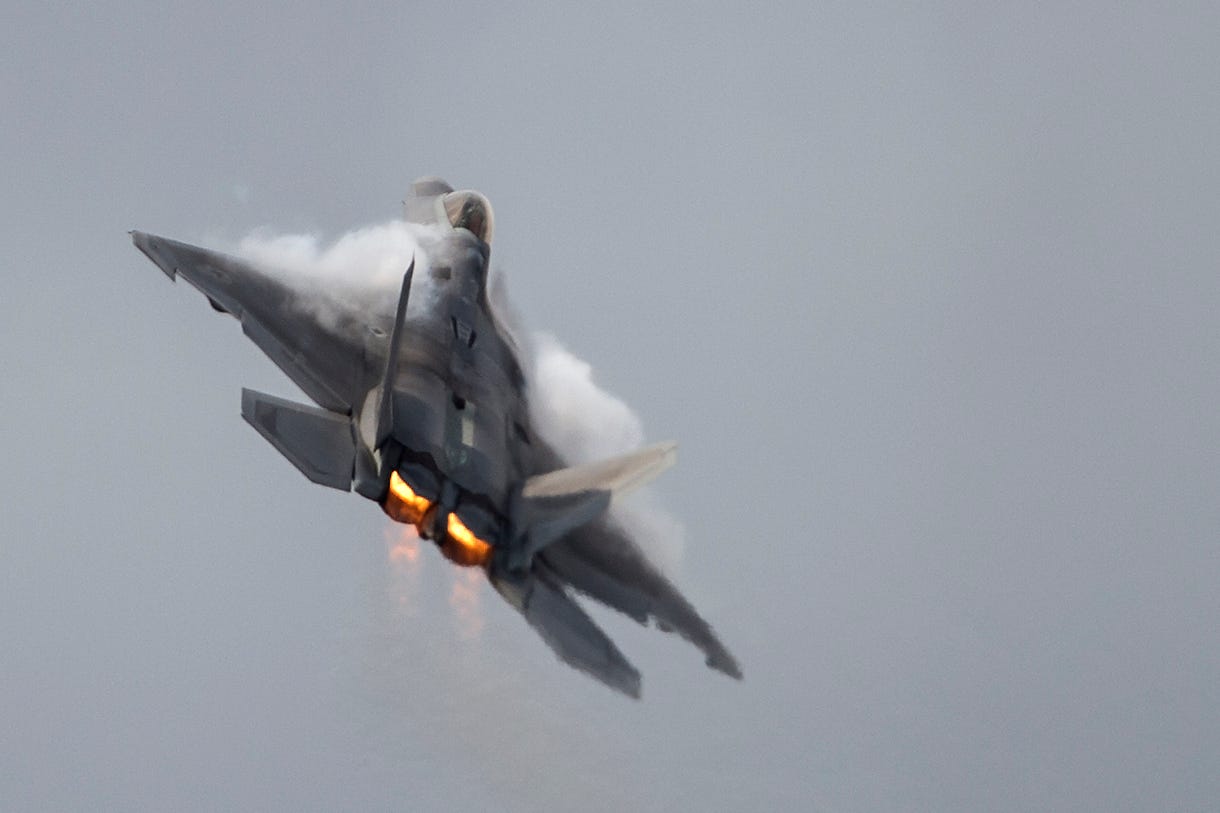
An F-22 Raptor on July 29, 2016. U.S. Air Force photo

Another traditional limitation of VHF and UHF-band radars is that their pulse width is long and they have a low pulse repetition frequency, which means such systems are poor at accurately determining range.

As Mike Pietrucha, a former Air Force electronic warfare officer who flew on the McDonnell Douglas F-4G Wild Weasel and Boeing F-15E Strike Eagle once described to me, a pulse width of 20 microseconds yields a pulse that is roughly 19,600 feet long — range resolution is half the length of that pulse. That means that range can’t be determined accurately within 10,000 feet.

Furthermore, two targets near one another can’t be distinguished as separate contacts.

Signal processing partially solved the range resolution problem as early as the 1970s. The key is a process called frequency modulation on pulse, which is used to compress a radar pulse. The advantage of using pulse compression is that with a 20-microsecond pulse, the range resolution is reduced to around 180 feet or so.

There are also several other techniques that can be used to compress a radar pulse such as phase shift keying. Indeed, according to Pietrucha, the technology for pulse compression is decades old and was taught to Air Force electronic warfare officers during the 1980s.

The computer processing power required for this is negligible by current standards, Pietrucha said.

Engineers solved the problem of directional or azimuth resolution by using phased array radar designs, which dispensed with the need for a parabolic array. Unlike older mechanically scanned arrays, phased array radars steer their radar beams electronically. Such radars can generate multiple beams and can shape those beams for width, sweep rate and other characteristics.

The necessary computing power to accomplish that task was available in the late 1970s for what eventually became the Navy’s Aegis combat system found on the Ticonderoga-class cruisers and Arleigh Burke-class destroyers. An active electronically scanned array is better still, being even more precise.

With a missile warhead large enough, the range resolution does not have to be precise. For example, the now antiquated Russian-made S-75 Dvina — known in NATO parlance as the SA-2 Guideline — has a 440-pound warhead with a lethal radius of more than 100 feet.

Thus, a notional 20-microsecond compressed pulse with a range resolution of 150 feet should have the range resolution to get the warhead close enough, according to Pietrucha’s theory.

The directional and elevation resolution would have to be similar with an angular resolution of roughly 0.3 degrees for a target at 30 nautical miles because the launching radar is the only system guiding the SA-2.

For example, a missile equipped with its own sensor — perhaps an infrared sensor with a scan volume of a cubic kilometer — would be an even more dangerous foe against an F-22 or F-35.

This article originally appeared at The National Interest.

Posted in elektroniikka, simulaatio, Sotapelit, teknologia | Tagged , | Leave a comment

IltaLehden eilinen kartta Suomesta

Eilisessä iltalehdessä oli kartta, ja juttua jossa näkyy kummia: Venäjän puolustusvoimien näkemyksiä hyökkäyksestä kohti länttä että voidaan auttaa merisotaa pohjoisilla vesillä. (Linkki juttuun). Venäjälle GIUK aukko ja sitä ympäröivät vedet ovat tärkeitä koska:

  • NATOn kuuntelulinja sijaitsee täällä, Tällä NATO koettaa mahdollistaa aikaisen Venäjän (ja aikaisemmin NLn) hyökkäysveneiden löytämisen, ennekuin ne pääsevät hyökkäämään saattueiden kimppuun Atlantilla. NATO toisi pohjoisamerikasta paljon miehistöä ja ennekaikkea materiaalia Eurooppaan suursotaan valmistautuessaan. On paljon helpompaa upottaa Ps-divisioona kuin tuhota se maatasitelussa nääs.
  • Toisaalta Venäjä haluaa suojella Meribastionia suurinpiirtein Kuolan-Valkoisen meren alueeella. Alueella siis toimivat Venäjän ohjusveneet, niihin ei saa päästää NATOn hyökkäysveneitä käsiksi.

Suorin reitti GIUK kylkeen sattuu menemään Alakurtista-Kemijärvi-Rovaniemi-Tornio-Kalix-Luulaja kautta Tromssan tienoille. Tästä kannattaa lukea enemmänkin vuonna 2014 ilmestyneestä USAn puolustusministeiön opuksesta Northwestern TVD and Soviet operational Starategic planning. *.Pdf luettavissa TÄÄLLÄ. Kirjoittaja varoittaa että ajat ovat muuttuneet, mutta ILn kartta osoittaa että eivätpä suunnitelmat ja suunnitelun realiteetit ainakaan kovin paljon.

Tämä asia lienee yksi niistä syistä miksi Leopard II A4 vaunut ovat nyt kotiutuneet Sodankylään Ylen Juttu. Ei yksi vaunujoukkue kesää tee, mutta ilmeisesti katsotaan, että alueen puolustaminen vaatii avukseen myös panssareita. Muutenhan hyökkäysurana Alakurtti-K:järvi- Rovaniemi-(Yli)Tornio on hyökkääjälle painajaismainen. Tie kulkee suurimmalta osalta kapealla kannaksella soiden ja vesistöjen välissä. Maasto on rikkonaista, ja Rovajärven alue PVn ja paikallisten reserviläsiten paremmin kuin erittäin hyvin tuntemaa. Jokilinjat ovat leveitä ja joet lisäksi virtaavat nopeasti. Suomalaisilla on on paljon epäsuoraa tulta, jolla voidaan vaikuttaa pitkältä matkalta  ja aiheuttaa vakavia erityisajoneuvojen ja pioneerien tappioita. Not nice siis.

Eli vaikka se nyt kartalta satuttiin huomaamaan, niin ei se mikään uusi asia ollut.


Posted in armeija, Buildup to war, hypoteesitilanne, informaatiosota, Reserviläiset, Sodanajan joukot, Sodanajan toiminta, Sotapelit, Suomi ja Ruotsi, Tilanne päällä, uhka-arvio, voimapolitiikka | Tagged , , , , , , , , | Leave a comment

Stug-III in video

Finnish Evening paper Ilta-Sanomat has released a bit “World Of Tanks” video. You can see it HERE. It is of course in Finnish.

Basically it just tells you how good a tank killer Stug-III was in Finnish front. We lost 8 and at the same time StuG’s killed 87 tanks. Even tough the Germans thought StuG III obsolescent, it was still very viable in Finnish environment: It could kill even the heaviest of tanks in General Finnish combat ranges (up to 500m). It was light and pretty mobile and had decent armor.

Waiting for WOT to make a trip to Finnish armor museum in Hämeenlinna.

Posted in Aseet ja varusteet, Historia | Tagged , , | Leave a comment

Suomi, Terrorismi ja AntiTerrorismi

Olen kirjoittanut ennemminkin koko Suomea koskevasta Terojen ja AnTeroiden välisestä taistelusta. Olen myös kirjoittanut siitä, kuinka poliisien puuttuminen, ja selvittämättömät omaisuusrikokset rapauttavat tavan tolkullisen kansan luottamusta poliisiin ja valtion ylläpitämään väkivaltakoneistoon. Eteläisemmässä suomessa on perustettu vartioporukoita, joissa paikalliset isännät ajelevat pitkin kyliensä raitteja etsiskelemässä puolalaisia taulukauppiaita ja muita epäilyttäviä tyyppejä. Nämähän eivät ole vasemmiston vierastamia “katupartioita” vaan yhteiskunnan pettämien veronmaksajien yrityksiä säilyttää rauha omilla kylillään.

Tämä tarkoittaa sitä, että yhteiskunta, tässätapauksessa siis poliisi, on pettänyt veronmaksajat: Valtion ja yhteikunnan TÄRKEIN tarkoitus on suoda turvallisuutta jäsenilleen. Linkkaamassani jutussa eläkkeellä oleva entinen poliisiylijohtaja Paatero puhuu juuri tästä sisäisen turvallisuuden ongelmasta, ja muistuttaa, että pelkkä SuPo ja tiedustelulainsäädäntö ei takaa yhteiskunnan turvallisuutta, edes terroristeiltä, muilta rikollisilta puhumattakaan. Entisen poliisiylijohtaja Mikko Paateron Antiterrori juttu.

Poliisilain ensimäinen pykälä sanoo näin: “Poliisin tehtävänä on oikeus- ja yhteiskuntajärjestyksen turvaaminen, yleisen järjestyksen ja turvallisuuden ylläpitäminen sekä rikosten ennalta estäminen, paljastaminen, selvittäminen ja syyteharkintaan saattaminen. Poliisi toimii turvallisuuden ylläpitämiseksi yhteistyössä muiden viranomaisten sekä yhteisöjen ja asukkaiden kanssa ja huolehtii tehtäviinsä kuuluvasta kansainvälisestä yhteistyöstä.” Kopioitu FinLexistä. Huomatkaa tuo YLEISEN JÄRJESTYKSEN JA TURVALLISUUDEN ylläpitäminen. Tämä sivulaise tarkoittaa että poliisi EI OLE vastuussa sinun tai minun tai meidän perheidemme turvallisuudesta vaan YLEISESTÄ sellaisesta.

Vaikka tuntuisikin siltä, että poliisin pitäisi antaa turvallisuutta sille yritystään vahtivalle yrittäjälle, niin se ei sitä tee. JOS tuo yrittäjä vahingossa menee TEKEMÄÄN jotain vaikkapa nyt tupakkia kaupastaan pihalle kantavalle nuorisojoukolle, HÄN on syyllinen yleisen järjestyksen rikkomiseen. Lapissa vähennellään taas poliiseja, koska on niin rauhallista, mutta se johtuu siitä että lapin kylien väki on jo aikaa opetettu siihen että poliisi tulee jos tulee kun tulee. Hyvää osviittaa poliisin toimintaan Lapissa saa Lapin poliisit sarjasta. Matkat ovat pitkiä, ja päivät myös mutta hyvin vähän ns tuottavaa työtä ehditään tehdä päivän aikana.

Suomeen “oikea” määrä poliiseja olisi noin 10 000, mutta vuoteen 2018 mennessä on virkojen määrä tarkoitus vähentää 7000. Eli meille tulee noin 30% vajaus poliiseissa. (Norjassa ja tanskassa on molemmissa noin 10 000 poliisia. Tanskassa vähän suuremmalla väestöllä ja Norjassa suhteellisen samoilla väestöntiheyksillä ja välimatkoilla). En kuitenkaan usko, että suomalainen polisi vastaa 1,3 norjalaista, vaikka varmasti päteviä miehiä ja naisia ovatkin.

Eli turvallisuus ja turvallisuustilanne tulee rapautumaan, mutta tarkoistus tuntuu olla tehdä turvallisuudesta bisnestä, jolle pääsevät yksityiset vartiontifirmat mälläämään. Koska poliisi ei toimi, täytyy jotenkin saada omaisuutta turvattua.

Terrorismintutkija Leena Malkki oli haastateltuna, ja kaipasi lisää arvostusta tutkimusalalleen. Älä huoli, arvostamme kyllä, mutta Terrorismintutkimus ei valitettavasti anna sellaista tietoa joka olisi välittömästi käyttökelpoista, kun tilanne on päällä, vaan antaa näkemystä terrorismin kehityslinjoille ja torjumiselle pitkällä aikavälillä. Koska tutkimuskohde on tosiaan vaarallisten rikollisten organisaatio, on tutkimuskin luonnollisesti enemmän “after the fact” kuin ennakoivaa. Helsingin sanomien juttu Leena Malkista.

Istambulissa Joulupukkiterroristi iski yökerhoon: 39 kuollutta. Rovaniemellä pelättiin että ISIS tulee ja kusee koko kaupungin vihtaan tappamalla pari turistia keskustassa tai mikä pahempaa J-pukin pajakylässä: Tämä uhka ei materialisoitunut.

Kuten jo kirjoitin: Poliisi on säästetty kuralle ja se ei pysty, vaikka laki sanoo mitä, turvaamaan yleistä turvallisuutta edes Joulupukin pajakylässä aukottomasti. Siksi interpolin päällikön ehdotuksen mukaan on aika alkaa rakentaa Suomeen, ja Eurooppaan vaikka Eurosossut kuinka vastutstavat, ns Concealed carry instituutiota ja käyntäntöjä. Näillä keinoin turvallisuus saadaan paljon aukottomammaksi. Ei täydelliseksi mutta parhaaksi mahdolliseksi.


Posted in Aselait, sisäinen turvallisuus, uhka-arvio | Tagged , , , , , | Leave a comment

Robotit taistelukentillä nyt ja tulevaisuudessa, ja petipuuhissa.

YLEn aamuTVn robottisotilasjuttu

Näin joulun aatonaattona olisi miellyttävämpi  aiheita kuin robotit ja robottien tappamat ihmiset, mutta koska asia on ollut viime syksynä, ainakin Ylellä tapetilla, ajattelin että avaan asiasta sanaisen arkkuni.

Sinänsä siinä, että kone tappaa ihmisen ei ole mitään uutta: Ihmisiä kuolee teollisuuslaitoksissa ja muissa vaikkapa  autojen ja laivojen sun muiden masiinoiden aiheuttamissa onnettomuuksissa. Koneitten suunnittelu tappamaan ei myöskään ole mitään uutta: samoin “wanhaan aikaan” kun miinat olivat Suomessakin sallittuja ne oli ihan suunniteltu että Ihmiset menevät, niin no ainakin vihollissotilaat niihin kuolevat. Sinänsä se, että kuinka aktiivisesti kone etsii ihmistä surmattavaksi on se ja sama, koska George Pattonin sanoin: “ei sotaa voiteta kuolemalla oman maan puolesta vaan pistämällä toinen kaveri kuolemaan oman maansa puolesta”.  

Robotit ovat tietenkin tässä ihmisiä vastaan suunnattujen koneiden jatkumossa seuraava kehitysaskel Suomessakin on suunnitelmia siitä, että uudet miinat tulevat ajamaan, ryömimään tai lentämään niitten vihollisten kimppuun Ketkä valtakuntaa uhkaavat.  Tätähän kokeiltiin helsingissä jo joskus 2005-2010 laittamalla pommi RC autoon, jota yritettiin ajaa kohteen auton alle. Sikäli eri juttu, että tuota RC autoa piti tietenkin ihmisen ohjata aktiivisesti. Toisaalta vaikkapa ilmataisteluohjus ei saa varsinaisen laukaisukäskyn jälkeen mitään inputtia ampuneelta operaattorilta, vaan on joko omassa tai toisten koneiden ohjauksessa maaliin asti, jossa toiset koneet tekevät vastatoimia, tai ohjaajat lentäjää vastatoimissa. Eli kyllä automatiikka on hyvin vahvasti läsnä tapahtumassa molemmin puolin.

Tämä kehityssuunta tietenkin aiheuttaa muutaman moraalisen ongelman: Onko oikein että taivaalla lentävä lennokki etsii ihmisiä? No, lennokkeja tähän tehtävään on käytetty hyvin pitkään, esimerkiksi raja valvonnassa. Sitten se toimiiko lennokki aktiivisesti itse näitä havaitsemiaan vihollisia vastaan, vaikkapa ampumalla ohjuksen, vai kutsuuko se esimerkiksi paikalle tykistö tulta on sitten vain semantiikkaa. Kuolleen kannalta sillä ei ole paskankaan väliä.  Virolaiset testaamassa etäohjattuja tankkeja

Venäjän erikoisjoukot tappavat ISIS johtajan. Tässä videossa venäläiset erikoisjoukot ampuivat tsetseeni komentajan tai tekstitys Hän puhui ISIS komentajasta robotilla. Tarina ei kerro Onko tämä robotti autonominen, elikkä etsiikö se itse kohteensa, vai onko siellä jossain ihminen, joka etäohjattava laitetta.  USA-laisethan toimivat sillä tavalla että heidän Predator lennokkejaan lennetään Las Vegasin lähistöltä autiomaasta ja itseasiassa itse Afganistanissa ja Irakissa paikalla on vain huoltomiehistöä ja jotka lataavat ja tankkaavat koneita ja pistävät ne ilmaan ja maassa huoltavat.

Kaikki lentäminen tapahtuu turvallisesti kontista kymmeniet tuhansien kilometrien päästä.  Elokuvan Good kill traileri Tästä kertoo linkkaamani elokuva “good kill” erittäin hyvä tarina hävittäjälentäjästä, josta on tullut lennokkilentäjä ja moraalisista ongelmista ja pitkistä päivistä, joita nämä lentäjät joutuvat tekemään luin “War is boring:in blogin aiheesta.

Tällä hetkellä, koska aselaji tai lennokin lennättäjien, tarve kasvaa maavoimissa nopeasti eivät lennokkilentäjät, Eivätkä edes lennokki lentäjien kouluttajat ehdi suorittaa koulutusohjelmaansa valmiiksi ennenkä heidät pistetään tositoimiin.  Päivät ovat pitkiä palkka huono ja ihmiset kuulemma lopen kyllästyneitä tähän hommaan. Ovat kuulemma jossakin yksikössä jopabuuanneet yksikkönsä komentajalle, mikä on varmaankin aika ennenkuulumatonta militääri organisaatiossa.

Edit 14.1.2017: USAssa on nyt julkistettu ensimäiset kokemukset “pienoislennokkien” parviälyllä toimivasta sovelluksesta. SuperHornet pari pudotti toistasataa litran pullon kokoista lennokkia surraamaan alueelle ja tekemään tehtävää. Toiminta-aikaa näillä puteleilla on noin 20 min, ja ne ovat periaatteessa kertakäyttisiä. Video TÄSSÄ.

 Tietenkin olemme vielä hyvin kaukana Arnold Scwarzennegger Terminaattorirista, jotka autonomisena robotteina kulkisivat täällä pitkin maita ja mantuja ja etsivät John Connoria tapettavaksi. Ei vielä, mutta se päivä lähestyy. Tällä hetkellä se on akkutekniikan kehittymättömyyden takia vielä aika kaukana mutta sekin päivä tulee.  Koska sinänsä ei ole vaikeaa rakentaa robottia, mutta kuinka robotille saa riittävän määrän energiaa mukaan niin se on tällä hetkellä “se” kysymys.

Hyvin pieniä lämpökamera laitteita sekä optisiasensoreita, kuten vaikkapa jokaisen meidän kännykässä, on kyllä helppo ja halpa saada jonkin näköisen suhtellisen tehokkaan  tietokoneen saa noin 40 egellä ja siihen kun rakennetaan muu automatiikka lisäksi, niin aletaan puhua “tuollaisesta jonkinnäköstä Terminaattori robotista”.

 Videolla virolaisilla oli harjoituksissa mukana tällaisia robotteja, joissa oli konekivääri mutta käsitin, että ne olivat etä ohjattuja ja uskon että se etäohjaus tulee vielä aika pitkään olemaan luonnollista tämäntapaisissa sovelluksissa, koska ihmisen nyanssin käsityskyky on huomattavasti paljon parempi kuin robotilla, jossa logiikka on pitänyt kerran ohjelmoida ja kun se logiikka on kerran ohjelmoitu niin se on sitten sillä hyvä.

 Mielenkiintoisen lisän tähän keskusteluun toi sitten Ilta-Lehti kertoessaan näistä pikkuisen paremmanlaatuisesta pumpattava barbararoista. Todellisesta seksilelujen rolls-royceltä, jossa jonkinnäköistä tekoälyä aletaan ohjelmoida näihin robotteihin, että ne osaavat “miellyttää asiakkaita paremmin”. Tämä alkaa sitten mennään jo lähellä replikanttien “Blade Runner” hommia. Saapa nähdä mitenkä esimerkiksi uusi Blade Runner elokuva tätä aihetta käsittelee. Onko tässä seksihommassa moraalista ongelmaa vai ei ? Minusta ei, JOS joku haluaa bylsiä vaikka tietokonettaan, niin oma asiahan se on, Tietenkin saattaa työllisyys laskea noissa thai hieromapaikoissa, mutta eihän sekään ole minun ongelmani.

Iltasanomat nostaa tässä, jostakin syystä, esiin, koneiden tai tekoälyn, oikeuden tehdä valintaa siitä ketä ne haluavat sitten hoidella. Eli siis HALUAAKO kauniiksi tehty kone jörniä ylipainoisen ja kaljuuntuvan 48 vuotiaan entisen adoniksen kanssa? Ei se ole mikään ongelma: Ohjelmoidaan se kone sellaiseksi, että se tykkää juuri tuon segmentin ihmisistä. Onko silloin toisaalta kyseessä enää “vapaa valinta”? Ei, kyseessä on ohjelmistotekninen, ei edes ongelma, vaan tehtävä.

Saa nähdä miten kehitys menee? Tehdäänkö enemmän näitä Ranskan Felinin ja Saksan Liittotasavallan IdZ  (Muillakin Eurooppalaisilla valloilla on omat projektinsa.) tapaisia sotilaaseen integroitavia järjestelmiä, vai yritetäänkö päästä robotteihin. Varmaan sekä että. Tämä automatisaatio lähtee eteenpäin ilmavoimista ja saavuttaa jalkaväen viimeiseksi.

Posted in Epäselvää ajatustenlentoa, Jotain aivan muuta, teknologia | Tagged , , , , , | 1 Comment

Now it is offical: Millog to refurbish the old Rk-62s into Rk-62m.

uusi20rk

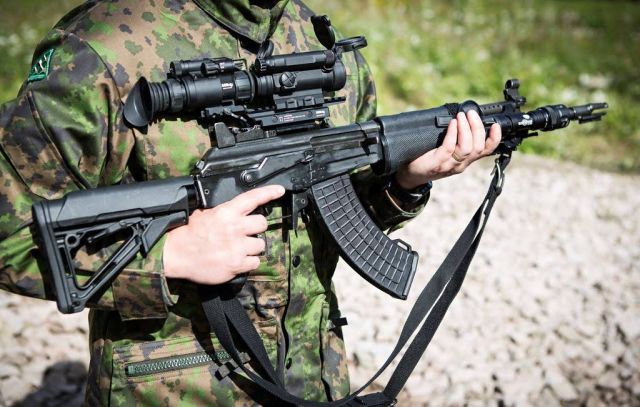
Picture courtesy of Iltasanomat newspaper.

Here is the bit in Finnish: Basically it is just that Millog will make the modernization work, This will include optical mount, some picatinny rails tactical sling (1 point sling I’m guessing) and new selector. not to forget telescopic stock. 80% Finnish made, and about 50 work years worth of doing. This might add up since FDF will be stepping wartime strenght up from meagre 235 000 men they are now into 350 000 neighbourhood.

The ILTASANOMAT bit about the future rifle (in 1st national I’m afraid)

Posted in Aseet, Puolustusvoimat, Sodanajan joukot, varusteet | Tagged , , | 1 Comment

ReBLOG: Tom Clancy and Red Storm Rising

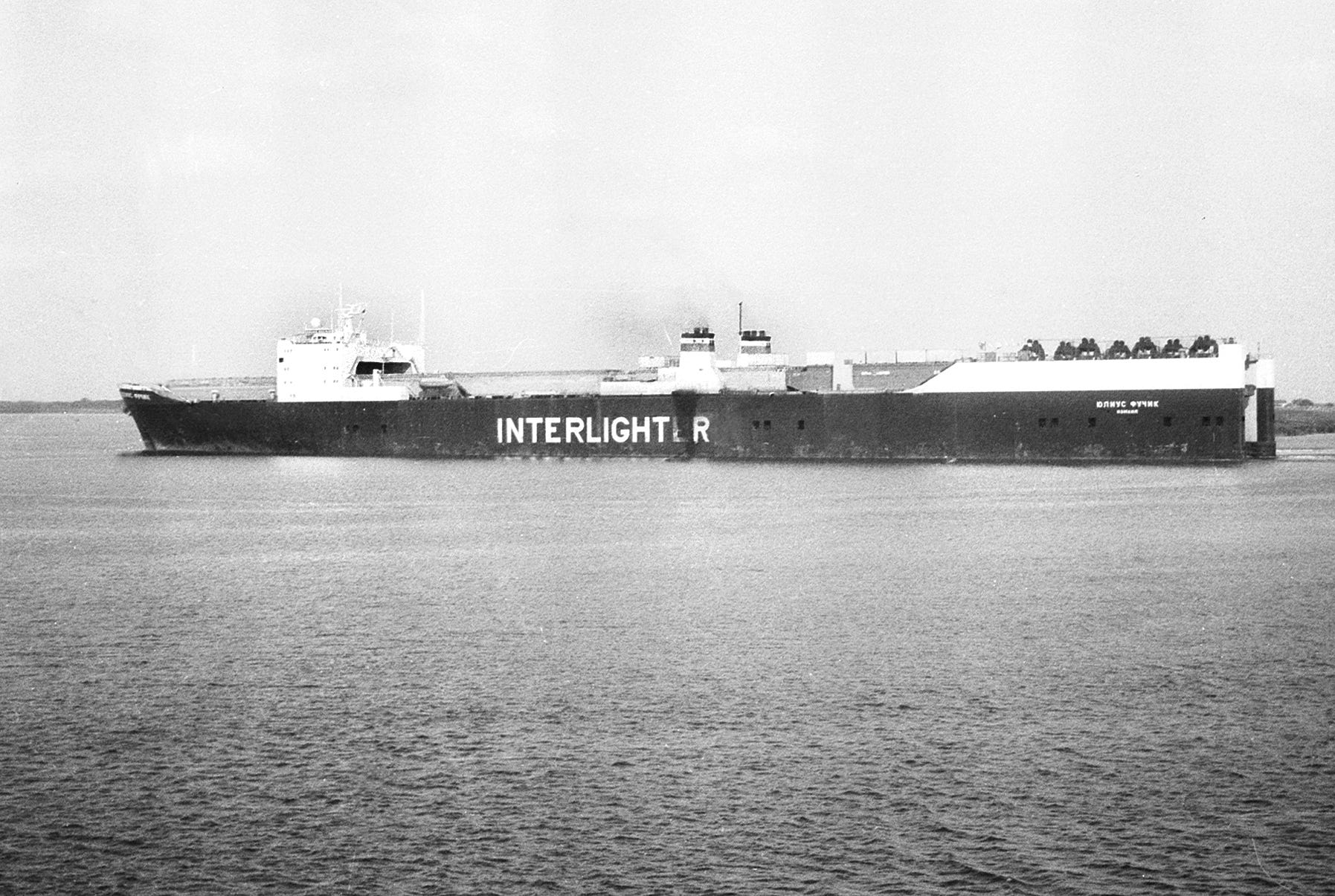
‘Yulius Fuchik,’ a Soviet barge carrier and a central character in Tom Clancy’s novel ‘Red Storm Rising.’ Dmitriy Lakhtikov photo via Wikimedia

So, Was Tom Clancy Right That the Soviets Could’ve Invaded Iceland?

Yeah, probably

by ROBERT BECKHUSEN

Tom Clancy’s 1986 novel Red Storm Rising depicts a conventional war between NATO and the Warsaw Pact. It’s one of Clancy’s best books and, interesting for a story about a Third World War, doesn’t involve a nuclear apocalypse.

It does describe a ground war in Germany, naval and air battles in the North Atlantic and — central to the plot — an invasion of Iceland by a regiment of Soviet troops. Clancy, who died in 2013, was known for his realism and extreme attention to technical detail.

In Red Storm Rising, the Soviet troops overwhelm a U.S. Marine company in the Nordic island country after sneaking to shore inside the MV Yulius Fuchik, a civilian barge carrier loaded with hovercraft. Before the amphibious assault, Soviet missile target and destroy NATO’s F-15 fighters based at Naval Air Station Keflavik.

Iceland was an overlooked by highly strategic location in the Cold War. Were the Soviet Union’s attack submarines to break out into the Atlantic and threaten NATO shipping, neutralizing Iceland and penetrating the “GIUK gap” would be of vital importance.

But that doesn’t mean the Soviets really could’ve invaded Iceland … right?

For a possible answer, let’s consult The Northwestern TVD in Soviet Operational-Strategic Planning, a 2014 report by Phillip Petersen — an expert on the Soviet and now Russian militaries for the Potomac Foundation.

In December, the Pentagon’s Office of Net Assessment made the report public and available on its website.

Petersen’s analysis is a revealing blueprint for how to defend Scandinavia from a Russian attack. Much of the report is comprised of military-oriented descriptions of remote rivers and sparsely-inhabited valleys — pictures included — which the word “obscure” can barely describe. Obscure, except in case of World War III.

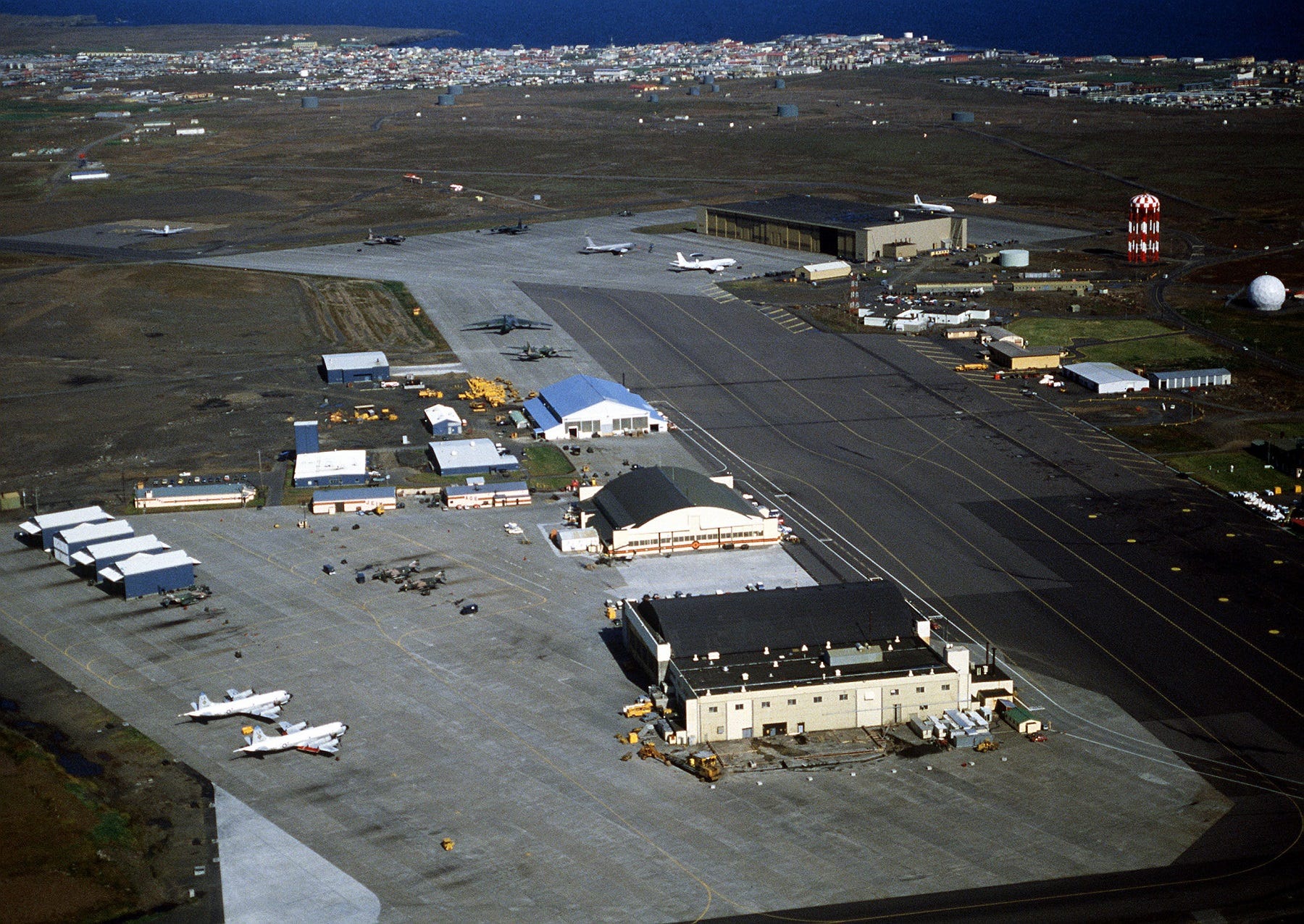
Naval Air Station Keflavik in 1982. American F-4 Phantoms, seen above, were based there until the mid-1980s when F-15 fighters took over. U.S. Air Force photo

“Faced with a predominantly sea-oriented NATO coalition dependent on control of the [sea lines of communication], there can be no question but that the Soviets would have liked to capture or at least neutralize Iceland,” Petersen wrote.

“Soviet operations against Iceland could have theoretically covered a wide spectrum of means, ranging from air and missile attacks to troop assaults.”

Supporting the theory that the USSR could have pulled off a Clancy-style surprise attack, the Soviet Union possessed the exact equipment in Red Storm Rising — reflecting Clancy’s attention to all-things hardware —suitable for landing troops in Iceland without the need for a major port.

In fact, the Soviets trained to use such repurposed “roll-on/roll-off” vessels like Yulius Fuchik for precisely those kinds of missions. Meanwhile, NATO kept its military presence in Iceland minimal because of the country’s heated political divisions over its participation in the alliance.

Iceland has not had a military since 1869.

Thus, in the event of a war breaking out, NATO would have to rush troops to the island and shore up its defenses to raise the costs of, and hopefully deter, a Soviet attack.

Iceland’s remote location and ruggedness — and the Soviet Navy’s comparative weakness — meant that a surprise attack by a small and relatively light force before the Western alliance could respond was Moscow’s only feasible strategy.

The Soviet military had experience with similar operations in World War II, including deploying small teams to Norway to spy on German troops. In 2014, Russia carried out an almost-bloodless surprise attack on Crimea which occurred too quickly for Ukraine to respond.

Iceland would’ve been a far more difficult target. For one, there was the problem of distance. The country is also windy and rough, making an airborne drop an exceedingly hazardous proposition. Paratroopers might have been swept away by winds and dashed into rocks, or broken their legs upon landing.

And any Soviet operation would have faced challenges at sea. The Kremlin would have to bet on basically perfect weather and skilled navigators to make it through Iceland’s narrow fjords and around its numerous reefs.

However, “even if the Soviets had attempted a lower-risk effort such as inserting a naval infantry company by submarine,” Petersen wrote, “such a force might have been sufficient to attack the Kevlavik airbase, while special-purpose (spetsnaz) forces, in teams of five to twelve men each, attacked outlying facilities like that at Hofn.”

Hofn was the site of a Cold War-era NATO radar station which tracked Soviet bombers heading south.

So the Soviets could’ve taken Iceland. Or at least caused a lot of chaos and disruption if the United States did not bolster the defenses beforehand.

But that would just be the beginning. A Soviet occupation force would probably face a NATO counter-attack, likely supported by at least one U.S. carrier battle group, without having Soviet warplanes backing them in comparable numbers — and little cover from NATO aircraft flying overhead.

Which is pretty much what happened in the fictional battle for Iceland in Red Storm Rising. NATO won.

Posted in hypoteesitilanne, Jotain aivan muuta, sotapelit, Suomi ja Ruotsi, Tilanne päällä | Tagged , , | Leave a comment