New developments in Weapons duty laws

Ok “weapons duty laws” sound really imposing. They are just laws that govern your conscription and duties as a reservists in “Finland’s Heavy” There will be quite dramatic changes there and for the good I might ad: Commander of the Finnish defense Force can with his own volition command 25000 men into service. Without consent from political decisionmakers. Commander in chief, the President will be able to call up as many as there are available, from the proposal of FDF commander.

Also your refresment days will double. 80 ays for enlisted, 150 cor specialist enlisted and 200 for non comissioned and comissioned officers. I hope this transfers into double refresmt days yearly.

EDIT: 10.2.2016 Armed service law, would be better translation.

There is link in Finnish HERE go google translate if you are Finnish impaired

Posted in armeija, Armeija 2020, Puolustusvoimat, Reserviläiset | Tagged | 2 Comments

Something on RAND paper

RAND published a noteworthy paper about a week ago. The biggest bruhaha was because this paper suggested that NATO would be unable to defend Baltic states, namely Estonia and Latvia. Lithuania was dropped out of the equation as nearness of Poland, a fellow NATO country, made it quite difficult for the reds to strike there.

I read the said paper over the weekend and I feel the findings are correct. Current forces (4 light brigades) are not sufficient to defend and push back the Russians after the attack. So more forces are needed. About seven more brigades, four of wich are heavies.

Nobody so far has commented on NATO brigades transformation from “cold war” brigades into “colonial” brigades. Something that are OK for punishing  unwashed heathens, but have little business of going against tank or motor-rifle brigade. NATO has largely dropped integral artillery and Anti air capabilities from these light brigades. This was something that RAND pointed out as well.

Finland seems to be a bit slow in the intake as Finnish brigades still have integral Artillery regiment, two battalions of artillery. In praxis brigade will be reinforced with another artillery battalion so that all three fighting infantry battalions will have a support from one artillery battalion (plus their integral 120 mm mortar company). There will be AAA battalion present as well. So they are still largely meant for fighting Russ, err A2 Yellow. Enemy that is surprisingly alike Motor-rifle battalion.

Third point was that NATO Air forces had to operate in this scenario largely from Stockholm area. This would pull Sweden without fail into the war. RAND did not take Finland into consideration at all. Maybe because they felt, that as NATO was in war with Russia, Norway would be fighting them in the North, which would force finland into guarding the neutrality stance at least. Other possible scenario in north fighting Russian push toward NATO rear area in Lapland as a part of NATO. There IS a tank alley there, one can find it from old NATO maps. 8)

RAND thought Russia would be able to make bubbles into NATO air supremacy and devastate the brigades fighting without integral Air to air capabilities. Staging air force assets into Sweden is a must, as airfields in Baltic are too exposed to VVSR and land based fires.

So it would seem that NATO has to dig up the old TO&E tables.

So, better start stocking up with those cannons, eh boys?

Posted in Baltic situation, hypoteesitilanne, Suomi ja Ruotsi, War in Baltic Region | Tagged , | Leave a comment

Suomi ja Ruotsi – käsi kädessä Natoon?

Lähde: Suomi ja Ruotsi – käsi kädessä Natoon?  Kirjoituksen olen napannut James Mashirilta, joka on edelleenottanut ja kääntänyt sen meille toista kotimaista huonommin raativille. Käännöksestä taas isot kiitokset Jamesille, on suuri onni että meillä on asiantunteva henkilö, joka jaksaa tehdä maanpuolustussometusta suurella sydämellä virkatöidensä ohella! 

Keskustelussa pidetään yleensä annettuna lähtökohtana, että Ruotsin ja Suomen tulisi kulkea yhdessä mahdollista Natoon liittymistä kohti. Vastaus ei itsestään selvä. Suomen sotilasstrateginen tilanne ei ole sama kuin Ruotsin, mikä voi johtaa toisenlaisiin johtopäätöksiin. Ruotsalaisesta näkökulmasta Natoon liittyminen on verrattain ilmeinen ratkaisu sekä Ruotsin että sen naapurimaiden turvallisuuden kasvattamiseksi ja alueellisen vakauden lisäämiseksi. Useimmat asianhaarat puhuvat sen puolesta, että Nato-jäsenyys vahvistaisi Suomen turvallisuutta, vaikka Venäjä näkisikin Suomen jäsenyyden kasvaneena uhkana ”legitiimeille turvallisuusintresseilleen”. Todennäköisyys sille, että Suomi voisi pysytellä mahdollisen Naton ja Venäjän välisen konfliktin ulkopuolella vaikuttaa pieneltä, sillä molemmilla osapuolilla on paljon hävittävää, jos toinen saisi pääsyn Suomen alueelle. Riski joutua yksin sotimaan suurvaltaa vastaan poistuisi. Samalla myös riski joutua ydinaseilla tapahtuvan painostuksen kohteeksi pienenisi, kirjoittaa Karlis Neretnieks.

Karlis Neretnieks, synt. 1949, on ruotsalainen kenraalimajuri evp. Hän puolustuksen ja turvallisuuden tutkimuslaitosten Swedish Defence Research Agencyn (FOI) ja Institute for Security & Development Policyn (ISDP) tutkija. Neretnieks on suorittanut sekä Ruotsin että Norjan puolustusvoimien yleisesikuntaupseeritutkinnon ja opiskellut Sveitsissä Insitut Universitaire De Haut Etude Internationales’ssa. Hän on mm. palvellut Ruotsin maanpuolustuskorkeakoulun (Försvarshögskolan, FHS) rehtorina, puolustusministeriön erityisavustajana, kansanvälisen keskuksen johtajana ja 18. mekanisoidun prikaatin komentajana. Neretnieks on Ruotsin kuninkaallisen sotatieteellisen akatemian jäsen.


Keskustelussa pidetään yleensä annettuna lähtökohtana, että Ruotsin ja Suomen tulisi kulkea yhdessä mahdollista Natoon liittymistä kohti. Vastaus ei itsestään selvä. Suomen sotilasstrateginen tilanne ei ole sama kuin Ruotsin, mikä voi johtaa toisenlaisiin johtopäätöksiin.

Ruotsalaisesta näkökulmasta Natoon liittyminen on verrattain ilmeinen ratkaisu sekä Ruotsin että sen naapurimaiden turvallisuuden kasvattamiseksi ja alueellisen vakauden lisäämiseksi. Sekä Natolla että Venäjällä on selvä tarve hyödyntää Ruotsin aluetta mahdollisessa Itämeren alueen konfliktissa. Naton täytyy käyttää Ruotsin ilmatilaa ja aluevesiä Baltian puolustamiseksi. Venäjän tarpeena on estää Natoa käyttämästä Ruotsin aluetta. Ruotsalainen Nato-jäsenyys vähentäisi Venäjän mahdollisuuksia Ruotsin alueiden ”lainaamiseen” ja parantaisi samalla Naton mahdollisuuksia toimia Baltian maiden puolustamiseksi. Venäjän mahdollisuudet, ja toivottavasti siten myös tahto, käyttää asevoimaa tai sen uhkaa Baltian maita vastaan vähenisi.

On kaksi perustavanlaatuista syytä siihen, miksi Suomen tilanne eroaa Ruotsin tilanteesta:

  • Suomen alue ei ole yhtä ratkaiseva Natolle kuin Ruotsin, mitä tulee Baltian maiden puolustamiseen vakavassa kriisissä tai konfliktissa
  • Suomen alueen, etenkin Pohjois-Suomen, avainasema useammassa uhkakuvassa, kuin pelkstään Itämeren konfliktissa korostuisi Nato-jäsenyyden myötä.

Tähän on vielä lisättävä Suomen ja Venäjän sotien historia, mikä yleensä on tärkeä tekijä venäläisessä ajattelussa.

Suomen alueen, etenkin ilmatilan käyttö, antaisi Natolle tiettyjä etuja mahdollisessa Baltian maita koskevassa konfliktissa, mutta ne ovat hyvin rajallisia verrattuna Ruotsin ilmatilan ja aluevesien käytön suomiin etuihin. Sitä paitsi Venäjällä on jo nykyään verrattain hyvät mahdollisuudet vaikuttaa Suomen ilmaoperaatioihin rajan tuntumaan sijoitetulla ilmatorjuntakalustollaan. Venäjän tarve vallata, toisin sanoen ”lainata”, Suomen aluetta Naton Baltian maiden operaatioiden vaikeuttamiseksi ei ole akuutti.

Venäjän kannalta merkittävästi vakavampaa kuin se, että Nato-maiden ilmavoimat käyttäisivät Suomen ilmatilaa, on Nato-Suomen (muiden kanssa) muodostama uhka Murmanskin tukikohtaverkostolle. Murmansk on kotisatama Venäjän strategisille sukellusveneille; kyvylle kostoiskuun ydinaseilla. Ydinaselogiikan mukaisesti tämän kyvyn menettäminen merkitsisi sitä, että iskun kohteeksi joutunut valtio menettäisi kyvyn iskeä takaisin. MAD-doktriinin (molemminpuolisen täystuhon doktriini, Mutually Assured Destruction) pelotevaikutus heikkenisi olennaisesti. Erona Ruotsin alueeseen, joka on keskeinen lähinnä Itämeren alueen kriisissä tai konfliktissa, tämä merkitsee sitä, että Suomen alue voi muodostua merkittäväksi myös muissa konflikteissa, jotka eivät suoranaisesti koske pohjoismaista aluetta. Venäjälle Murmanskin alueen suojaaminen on elintärkeä kansallinen intressi.

Murmansk sijaitsee vain 150 kilometriä Suomen rajalta. Etäisyys on lyhyt, vain muutama minuutti ilmateitse, 40 minuuttia helikopterilla tai puoli päivää taisteluajoneuvoilla ilman vastarintaa. Mikäli Venäjä näkisi Murmanskin alueeseen kohdistuvan uhkan kasvavan Suomen Nato-jäsenyyden myötä, mitä voidaan pitää todennäköisenä, merkitsisi se myös tarvetta voimakkaasti lisätä omaa sotilaallista kykyä alueella. Todennäköisesti syntyisi myös tarve yleisesti lisätä kykyä operaatioihin Suomea vastaan. Pohjois-Suomea ei voida tarkastella erillisenä operaatioalueena suhteessa muuhun maahan. Tämä puolestaan merkitsee sitä, että Suomi Nato-jäsenenä sotilaallisessa konfliktissa kohtaisi vahvemman vastustajan kuin liittoutumattomana. Tämä olisi Suomen kannalta erityisen ongelmallista huomioiden maan pitkän itärajan. Suurin avun tarve olisi maavoimien yhtymien tukemisessa. Tätä resurssia Naton olisi hyvin vaikeaa tarjota, etenkin kriisin tai konfliktin alkuvaiheessa.

Tässä voidaan nähdä tiettyjä yhtymäkohtia Stalinin vaatimuksiin Suomen alueen käyttöön vuonna 1939, Leningradia ympäröivän ”suoja-alueen” kasvattamiseksi, mikä tuolloin oli elintärkeä venäläinen strateginen intressi. Kiinnostavaa onkin se, että marsalkka Mannerheim ymmärsi venäläisten vaatimusten taustalla olevan sotilaallisen päättelyn asiassa ja oli valmis perin pitkälle meneviin myönnytyksiin. Johtopäätös ei ole itsestään selvä. Yhtäältä se voi olla, että mikäli ymmärretään ja ollaan valmiita sopeutumaan suuren naapurin ”legitiimeihin turvallisuustarpeisiin” voidaan välttää konflikti. Vaihtoehtoisesti voidaan päätellä, että ilman vahvoja liittolaisia ollaan pakotettuja taipumaan naapurin vaatimuksiin tai taistelemaan yksin.

Venäjällä tuskin on unohdettu, että toisen maailmansodan aikana saksalainen armeijakunta hyökkäsi Murmanskiin lähtöalueeltaan Pohjois-Suomesta. Samanlainen asetelma, joskin tällä kertaa Naton piirissä ja jossa ilmakomponentti olisi ratkaiseva, ei varmaankaan ole Moskovan yleisesikunnalle tai Venäjän historiaa tunteville johtajille vieras ajatus. Pohjois-Suomi olisi Venäjälle erittäin tärkeä suoja- tai puskurivyöhyke nykyisiä uhkia vastaan. Pohjois-Suomeen sijoitetut venäläiset ilmatorjuntajärjestelmät voisivat vaikuttaa Naton ilma-aseeseen aina Norjan Narvikiin asti. Tämä tekisi mahdottomaksi, tai ainakin vaikeuttaisi merkittävästi, Pohjois-Ruotsin tukikohtien, kuten esim. Luulajan, käyttöä. Sitä paitsi asetelma vahvistaisi merkittävästi mahdollisuuksia tukea omia (Venäjän) ilmaoperaatioita Norjaa ja siihen rajoittuvia alueita vastaan.

Perustelu, että suomalainen Nato-jäsenyys ei merkitsisi uhkaa Murmanskin alueelle, koska Natoon kuuluvalla Norjalla on jo maaraja Venäjään, on ilmeisen heikko. Tähän on pääasiassa kaksi syytä: Naton olisi vaikea kohdistaa laajempia sotatoimia Murmanskin suuntaan käyttämättä Suomen maa-alueita ja ilmatilaa ja samanaikaisesti myös Venäjän taholta tapahtuvan ”suoja-alueen” laajentaminen Pohjois-Suomeen vaikeutuisi ja sellaisen toimen riski kasvaisi. Yhteenvetona voidaan todeta, että Suomen Nato-jäsenyys, Venäjän kannalta tarkasteltuna, todennäköisesti lisäisi Murmanskiin kohdistuvaa uhkaa ja vaikeuttaisi myös Venäjän omia vastatoimia, so. Suomen alueen ”lainaamista”.

Tästä syntyy mahdollisuus ajatella, että suomalaisen liittoutumattomuuden puolesta puhuvat seuraavat mainitut seikat: Suomen alue ei ole keskeinen Baltian maihin kohdistuvassa konfliktissa ja Venäjä ei saa koskaan uskoa, että Murmanskiin kohdistuva hyökkäys tapahtuisi Suomen alueen ylitse. Merkittävänä tekijänä on myös Venäjän tunnustettu kunnioitus Suomen puolustustahtoa ja -kykyä kohtaan, näiden taustalla talvisodan ja jatkosodan kokemukset. Venäjän tahto hyökätä Suomeen on todennäköisesti hyvin rajallinen, kunhan Suomea, taikka Suomen alueen kautta Venäjään kohdistuvia operaatioita, ei pidetä merkittävänä uhkana.

Tällaisessa päättelyssä on kuitenkin kolme olennaista heikkoutta, joita on punnittava suomalaisissa arvioissa:

  • onko todennäköistä, että venäläiset päättäjät uskovat Naton ulkopuolisen Suomen pysyvän erossa yhteistyöstä liittouman kanssa pohjoiseen alueeseen kohdistuvassa kriisissä tai konfliktissa?
  • onko ylipäätään uskottavaa, että Suomea, tässä tapauksessa lähinnä Pohjois-Suomea, ei koskettaisi Naton ja Venäjän välinen konflikti, huomioiden alueen strategisen merkityksen molemmille osapuolille? (tätä kysymystä voidaan verrata ruotsalaisiin päätelmiin koskien Gotlannin asemaa Baltian maihin kohdistuvassa kriisissä tai konfliktissa)
  • onko Suomen vaarana taas joutua sotimaan yksin Venäjää vastaan?

Keskeistä näihin kysymyksiin vastattaessa on millaisena Suomessa uskotaan venäläisten päättäjien näkevän Suomen. Kuinka todennäköistä on, että Moskovassa aidosti uskotaan, että Suomi pysyisi ”puolueettomana” vakavassa lähialueen kriisissä tai konfliktissa? Suomihan Euroopan unionin jäsen ja kuuluu kulttuurillisesti ja taloudellisesti länteen. Olisiko myös todennäköistä, että Suomi hylkäisi EU:n solidaarisuuslausekkeen, mikäli johonkin Baltian maista kohdistuisi hyökkäys? Eikö Suomi kokisi uhkaa elintärkeille kansallisille intresseilleen, jos Venäjän vaikutusvalta Baltiassa kasvaisi merkittävästi taikka jos Venäjä valloittaisi Gotlannin? Jälkimmäisessä tapauksessahan Suomen kauppayhteydet muuhun maailmaan käytännössä katkeaisivat (Ruotsin jääminen Itämeren alueen konfliktin ulkopuolelle tuskin lienee minkään Helsingissä, saati Moskovassa, tehtävän suunnittelun lähtökohta). Välittääkö Nato Suomen mielipiteestä, mikäli liittouma pitäisi itselleen edullisena käyttää Suomen ilmatilaa operaatioissaan Viron tukemiseksi tai Murmanskin suuntaan, ja käyttäisikö Suomi silloin asevoimaa näiden torjumiseksi?  Amerikkalaisilla koneillaan ja amerikkalaisilla ohjuksillaan?! Eikö Suomen jo tiivistynyt yhteistyö Naton kanssa harjoituksissa, yhteensopivuuden ja yhteistoimintakyvyn alueilla ja ilmoittautuminen Naton joukkorekistereihin merkitse sitä, että Suomi on jo käytännössä valintansa tehnyt?

Venäjän näkökulmasta olisi kenties parasta vakavan Baltian tai Jäämeren aluetta koskevan kriisin tai konfliktin sattuessa suojautua aikaisessa vaiheessa, valloittamalla osia Suomesta, esimerkiksi Pohjois-Suomi ja Ahvenanmaa, ennen kun liittoutumaton Suomi pyytäisi ja mahdollisesti jopa saisi apua Natolta.

Suomen tulee myös arvioida, missä määrin Venäjälle syntyy tarvetta siirtää Murmanskin suojaa lännemmäs, liittyen muiden alueiden kriiseihin tai konflikteihin. Tämä ei siis ainoastaan koske Suomen lähialueen tapahtumia.

Suomen dilemma on mahdottomuus ennakoida mihin johtopäätöksiin Venäjän arvioinnit johtavat. Onko Suomen liittoutumattomuus ja sen myötä syntynyt koskemattomuus Naton suhteen uskottava Venäjän näkökulmasta? Ellei näin ole, onko vaarana joutua yksin taistelemaan suurvaltaa vastaan improvisoitua ulkomaista apua odotellessa, jota kenties ei lainkaan tule tai tulee liian myöhään?

Ydinaseaspektiakaan ei voida unohtaa tekijänä selvitettäessä suomalaista Nato-jäsenyyttä. Venäjän kasvava ydinasekyvykkyys, venäläinen keskustelu ydinaseiden käytöstä myös rajoitetuissa konflikteissa ja ydinaseen tarkastelu ”de-eskalaation välineenä” avaa mahdollisuudet ydinaseiden käytöllä painostamiselle. Millä keinoin Suomi kohtaisi sellaisen uhkan ilman luottamista Naton vastaavaan pelotteeseen?

Yhteenvetona voidaan todeta, että vaikka Venäjä kokisikin Suomen Natoon liittymisen kasvaneena uhkana ”legitiimeille turvallisuusintresseilleen”, niin useimmat asianhaarat puhuvat sen puolesta, että Nato-jäsenyys vahvistaisi Suomen turvallisuutta. Todennäköisyys sille, että Suomi voisi pysytellä mahdollisen Naton ja Venäjän välisen konfliktin ulkopuolella vaikuttaa pieneltä, sillä molemmilla osapuolilla on paljon hävittävää, jos toinen saisi pääsyn Suomen alueelle. Riski joutua yksin sotimaan suurvaltaa vastaan poistuisi. Samalla myös riski joutua ydinaseilla tapahtuvan painostuksen kohteeksi pienenisi.

Vastaus johdannossa esitettyyn kysymykseen ”liittyykö Suomen Nato-jäsenyys ruotsalaiseen jäsenyyteen” on ei. Yhteinen liittyminen merkitsisi toki etuja molemmille valtioille, mutta Suomella ei ole ratkaisevia motiiveja odottaa Ruotsia, oman edun pitäisi tässä painaa vahvemmin. Nato on Ruotsia tärkeämpi.

//Karlis Neretnieks
Kirjoittaja on kenraalimajuri ja KKrVAn jäsen
Twitter: @neretnieks
Blogi: karlisn.blogspot.se

P.S. Artikkelissa ei esitetä perusteluja suomalais-ruotsalaiselle yhteistyölle vaihtoehtona Nato-jäsenyydelle. Se johtuu siitä, että sellainen ”puolustusliitto” ei merkittävästi lisäisi Suomen turvallisuutta, vaan mahdollisesti päinvastoin. Puolustusliitto toisi pieniä etuja, esimerkiksi sen, että suomalaiset meri- ja ilmavoimien yhtymät voisivat tukeutua Ruotsiin, mutta merkittävää sotilaallista apua Ruotsilta tuskin olisi saatavissa. Ruotsilla ei yksinkertaisesti ole resursseja tukea Suomea. Suomen mahdollisuudet pysytellä Itämeren alueen kriisin ulkopuolella heikkenisivät verrattuna nykytilaan. Ruotsi joutuisi todennäköisimmin mukaan sellaiseen konfliktiin. Tämä korostuu Ruotsin rajallisen sotilaallisen kyvyn valossa – tila, joka kutsuu hyökkäämään. Riippuen siitä, rajoittuisiko konflikti Itämeren alueeseen (ts. näkeekö Venäjä Murmanskiin kohdistuvaa uhkaa vai ei) jää Suomelle tiettyjä mahdollisuuksia, joskin rajallisia, pysyä konfliktin ulkopuolella. Paradoksaalista onkin se, että ”Ruotsiliitto” on kenties huonoin vaihtoehto. Suomi joutuu suuremmalla todennäköisyydellä mukaan vedetyksi konfliktiin, samalla kun mistään avusta ei ole takeita, ei Ruotsilta eikä Natolta.


Tämä on rebloggaus ruotsalaisen kenraali Karlis Neretnieksin ruotsinkielisestä blogimerkinnästä Ruotsin kuninkaallisen sotatieteellisen akatemian Försvar och Säkerhetblogissa. Käännös virheineen on minun. Käännös ja julkaisu tapahtuu alkuperäisen luvalla. Käännöksen tarkoituksena on edistää älyllisesti rehellistä ja avointa suomalais-ruotsalaista turvallisuuspoliittista keskustelua. //James

Posted in Uncategorized | Leave a comment

F-land and S-den The key assets in defensing the Baltic?

Original text can be read from Foreighn policy. Some sobering thoughts here. Read and think. Original RAND report

If Russian tanks and troops rolled into the Baltics tomorrow, outgunned and outnumbered NATO forces would be overrun in under three days. That’s the sobering conclusion of war games carried out by a think tank with American military officers and civilian officials.

“The games’ findings are unambiguous: As currently postured, NATO cannot successfully defend the territory of its most exposed members,” said a reportby the RAND Corp., which led the war gaming research.

In numerous tabletop war games played over several months between 2014-2015, Russian forces were knocking on the doors of the Estonian capital of Tallinn or the Latvian capital of Riga within 36 to 60 hours. U.S. and Baltic troops — and American airpower — proved unable to halt the advance of mechanized Russian units and suffered heavy casualties, the report said.

The study argues that NATO has been caught napping by a resurgent and unpredictable Russia, which has begun to boost defense spending after having seized the Crimean peninsula in Ukraine and intervened in support of pro-Moscow separatists in eastern Ukraine. In the event of a potential Russian incursion in the Baltics, the United States and its allies lack sufficient troop numbers, or tanks and armored vehicles, to slow the advance of Russian armor, said the report by RAND’s David Shlapak and Michael Johnson.

“Such a rapid defeat would leave NATO with a limited number of options, all bad,” it said.

The United States and its NATO allies could try to mount a bloody counter-attack that could trigger a dramatic escalation by Russia, as Moscow would possibly see the allied action as a direct strategic threat to its homeland.  A second option would be to take a page out of the old Cold War playbook, and threaten massive retaliation, including the use of nuclear weapons. A third option would be to concede at least a temporary defeat, rendering NATO toothless, and embark on a new Cold War with Moscow, the report said.

However, the war games also illustrated there are preemptive steps the United States and its European allies could take to avoid a catastrophic defeat and shore up NATO’s eastern defenses, while making clear to Moscow that there would no easy victory.

A force of about seven brigades in the area, including three heavy armored brigades, and backed up by airpower and artillery, would be enough “to prevent the rapid overrun of the Baltic states,” it said. The additional forces would cost an estimated $2.7 billion a year to maintain.

The report was released Tuesday, the same day Defense Secretary Ash Carter unveiled plans to add more heavy weapons and armored vehicles to prepositioned stocks in Eastern Europe to give the Pentagon two brigade sets worth of heavy equipment on NATO’s eastern frontier.  As it stands now, there are two U.S. Army infantry brigades stationed in Europe — one in Italy and the other in Germany — but they have been stretched thin by the constant demands of training rotations with allies across the continent. The new $3.4 billion plan outlined by Carter and the White House would add another brigade to the mix, but it would be made up of soldiers from the United States, rotating in for months at a time.

Late last month, Gen. Philip Breedlove, commander of U.S. European Command, released a new strategy anticipating — and pushing back against— the call for more rotational forces. Flying troops in and out of the region “complements” the units who call Europe home, he wrote, but they’re no “substitute for an enduring forward deployed presence that is tangible and real. Virtual presence means actual absence.”

David Ochmanek from the RAND Corp., a former senior Pentagon official who has studied the challenge posed by Russia’s military, called the administration’s budget proposal for European forces an important step and an “encouraging sign.”

“Heavy armored equipment, pre-positioned forward, is the sine qua non of a viable deterrent and defense posture on the alliance’s eastern flank,” Ochmanek told Foreign Policy. But he said much more needed to be done to strengthen NATO’s defenses.

The findings from the war games will be warmly welcomed by senior officers in the U.S. Army, who have struggled to justify the cost of maintaining a large ground force amid budget pressures in recent years and a preference for lighter footprints. And the report will reinforce warnings from top military leaders, including the chairman of the Joint Chiefs of Staff, Gen. JosephDunford, that Russia may represent the number one threat to U.S. interests.

In early 2012, the Obama administration announced the withdrawal of two heavy brigades and their equipment from Germany, cutting deeply into the U.S. Army’s traditional, large footprint on the continent. Since then, the service has been slowly trying to move some hardware back into Germany for use in training exercises with NATO partners. Last year, U.S. Marines also began to roll a small number of Abrams tanks into Romania for a series of exercises with local forces.

Since Russia’s intervention in Ukraine sparked alarm in Eastern Europe, the United States has repeatedly vowed to defend Estonia, Latvia, and Lithuania in the event of an attack, citing its mutual defense obligations under the NATO alliance. In a September 2014 speech in Tallinn, President Barack Obama made an explicit promise to protect the Baltic countries.

“We’ll be here for Estonia.  We will be here for Latvia.  We will be here for Lithuania.  You lost your independence once before. With NATO, you will never lose it again,” Obama said.

But the RAND report said “neither the United States nor its NATO allies are currently prepared to back up the president’s forceful words.”

The borders that the three Baltic countries — all former Soviet republics — share with Russia and Belarus are about the same length as the one that separated West Germany from the Warsaw Pact during the Cold War. But in that era, NATO stationed a massive ground force along the frontier with more than 20 divisions bristling with tanks and artillery.

Tanks are few and far between now in NATO countries, the report said. Germany’s arsenal of about 2,200 main battle tanks in the Cold War has declined to roughly 250. Britain, meanwhile, is planning on pulling out its last brigade headquarters left on the continent.

With only light infantry units at the ready in the Baltics, U.S. and NATO planners are also worried about the continued Russian arms buildup in the exclave of Kaliningrad on the Baltic coast between Poland and Lithuania, and Moscow’s intention to build a new air force base in Belarus, just south of the Polish-Lithuanian border.

The war games run by RAND underscored how U.S. and NATO forces lack the vehicles and firepower to take on their Russian adversaries, which have maintained more mechanized and tank units. NATO ground troops also lacked anti-aircraft artillery to fend off Russian warplanes in the Baltic scenario.

“By and large, NATO’s infantry found themselves unable even to retreat successfully and were destroyed in place,” the report said.

In the war games, although U.S. and allied aircraft could inflict damage on the invading Russian forces, they also were forced to devote attention to suppressing Russia’s dense air defenses and defending against Russian air attacks on rear areas.

Although it was unclear if deploying more troops and armor would be enough to discourage Russia from gambling on an attack in the Baltics, NATO’s current weak position clearly did not pose a persuasive deterrent, the report said.

By undertaking “due diligence” and bolstering NATO’s defenses, the alliance would send “a message to Moscow of serious commitment and one of reassurance to all NATO members and to all U.S. allies and partners worldwide,” it said.

FP‘s Paul McLeary contributed to this report.

Photo credit: Sean Gallup/Getty Images

Posted in Uncategorized | Leave a comment

The HX-program, the good, the bad and the Ugly. Meet the Ugly

So now the F-35 is in more trouble than it has ever been, even the US Air Force has admitted that the F- 35 will not survive combat without presence of other assets ie, F-22 or F-15 in area. Its seems to likely that it will not be the aeroplane for Finland. Of course Lockheed Martin has made a lot of overtunes to airforce in Finland and invited the brass to come and see how the F-35 are produced in St Luis, but even though the political aspect here is very powerful I would say frighteningly powerful one has to keep in mind that if F-35 lightning II or flying cocktease is an airplane that cannot climb, cannot run and cannot turn.

So F-35 cannot survive air combat against any professional or even semi-professional adversary and I’m afraid Russia’s Voyenno-Vozdushnye Sily is at least at least semi professional. Also they have radars and equipment for detecting just the kind of planes F-35 is.

F-35 has been troubled airplane from the start because somehow somebody got the notion that it is possible to build an airplane that will meet 9 different slotsin AF arsenal:  the Tactical Fighter for Air Force,  Marine Corps and Navy and be able to fulfill the roles of close air support aircraft, light tactical fighter and a stealth aircraft, oh yes, and be jump jet as well.  This has led to many contradictions in airplane’s build. Most important of which is that the jumpjet capability needs to have a big fan within the fuselage of the airplane, this is very bad for Tactical Fighter but on the other hand tactical Fighter and close air support airplane will need large wing area in order to have a good fuel economy and good maneuverability and reasonable slow flight characteristics. But the need for ability to vertical take-off the plane needs to have small wings and thus it is quite impossible to have enough wing area in the aeroplane to make it a good turn and manouver fighter.  

Close air  support means that airplane has to be able to go reasonably slow and to have reasonably good weapons load to be able to support the ground forces it is supposed to be supporting. Not so with F-35. F-35 has to be an stealth, well  will not stealth aeroplane low observable aeroplane nevertheless,  so no external stores.  Most of the weapon load have to be carried within the airplane.  There is another problem internal stores of  the F-35. In the body there is barely enough room for a 4 air-to-air missiles.  And when the wings have been decorated with stores there goes “low observability” in radar. And you have just got another airplane visible in the radar just like the rest.  Lockheed MArtin tried to persuade the US air Force to abandon the A-10a and to buy more F-35. Fortunately somebody had still his sences and decided to keep the best plane of Afganistan and Irak wars.

Also the aeroplane is way too expensive at 110 million(W/O engine) a pop. Finnish Air Force could hope to get 60 airplanes which is not enough to defend the whole space of Finland. So no one has to hope that nobody in the Air Force brass or in politicians who are looking into the HX program will give serious consideration for F-35 fighter as a choice for the Rebublic.  The political aspect of this is a bit frightening: the buyer would be married to Lockheed Martin whose only goal in this is to make obscene amounts of money. Also you would be married to the ebb and flow of current strength between parties in US Congress and would you get permission to buy needed weaponry when you need it? In timely fashion?  That might be a small concern about the strong arm tactics with replacement parts packages weaponry engines and software updates is never the less daunting.  

if Canada and Australia are doing their best to bail out from the F-35 wagon I think it would be sensible for Finland not to get into it at all in the first place.

The US has known some time along that there is somethingfundamentally wrong with the F-35 because they had to deny Norwegians participation in Swedish JAS Gripen program.

This is how desperate Locheed-Martin and USA are to get buyers for the failing F-35. Lockheed Martin would like you to believe that f-35 has surpassed all the benchmarks it has been given. Yes that is true, but only after the capabilities needed to meet those requirements have been downgraded enough so that F-35 can meet them. This has come at the expense of a fighter combat survival capabilities. Normally fighter planes have a redundant systems, for example there is two fly-by-wire systems so that even though there might be extensive damage to the fighter it still remains airworthy. In F 35 these redundant systems and fail safes have had to go in order to meet weight requirements posted by US Air Force.
So I HOPE US will not be forcing the F-35 on Finland as a ticket to get into NATO. Finland should stay well clear of this cocktail.

Posted in HX-ohjelma, ilmavoimat, NATO jäsenyys, NATO keskustelu | Tagged , | 1 Comment

On the F-35 and America’s nuke deterrent

Lähde: On the F-35 and America’s nuke deterrent . Sama suomeksi lyhyesti “F-35 ei pysty käymään ilman tukea minkäänlaista ilmasotaa vakavastiotettavaa vastustajaa vastaan”. Eli se ei näytä USAlaistenkaan mielestä olevan se kone jonka he tarvitsevat. PAHA PAHA!


The Pentagon’s chief weapons testing officer, Michael Gilmore, has just produced a scathing report on the F-35’s effectiveness in combat.

In that report, the DOD’s Director of Operational Test and Evaluation states outright that the F-35 is incapable of waging unsupported combat (i.e. fighting without the assistance of other weapon platforms) against any “serious” adversary.

In other words, without other aircraft coming to its aid, the hyper-expensive F-35 cannot survive in combat against any serious threat, be it the high-performance Sukhoi Flankers (and their Chinese derivative), the highly agile and well-armed J-10 Sinocanard, or 5th generation stealthy Russian and Chinese fighters such as the PAK FA, the J-20 and the J-31.

Bill Sweetman has obtained an advance copy of the report for Aviation Week. He sums it up thus:

The Block 2B version of the F-35 Joint Strike Fighter, which the Marine Corps declared operational in July last year, is not capable of unsupported combat against any serious threat, according to Michael Gilmore, the Pentagon’s director of operational test and evaluation (DOT&E).

The problem for the F-35 program is that, according to the program defenders’ hype and Lockheed Martin’s corporate spin, the F-35 was supposed to be stealthy enough and armed sufficiently to defeat even the most advanced enemy fighters and air defense systems, even ones operated by competent personnel.

“Serious adversaries” armed with such advanced fighters and air defense systems were, for the last several years, given as the raison d’être for the F-35 program.

Yet, as I’ve been warning for the last several years, and as the Pentagon’s chief weapon tester has now confirmed, the F-35 stands no chance of surviving in combat against cutting-edge enemy aircraft and ADS – unless supported by other platforms such as the F-22 or the F-15.

Yet, the Pentagon cannot afford to procure such pathetically underperforming weapons. In this era of fiscal restraint, platforms which soak up protective escorts will be huge LIABILITIES, rather than assets.

The solution for the Pentagon is simple: eliminate these liabilities. Immediately kill the F-35 program, resume F-22 production, and quickly develop the Sixth-Generation Fighter.

In other news, another expert, Energy Secretary Ernest Moniz has warned that America’s nuclear deterrent and its supporting infrastructure are woefully underfunded and urgently need modernization:

“North Korea’s nuclear test last week is a reminder that we’re living in a new era of nuclear proliferation. Now comes a warning from U.S. Energy Secretary Ernest Monizthat the Obama Administration is neglecting America’s nuclear umbrella.

(…)

Mr. Moniz went on to note that “a majority of NNSA’s facilities and systems are well beyond end-of-life.” Also, “infrastructure problems such as falling ceilings are increasing in frequency and severity,” as more than 50% of facilities are at least 40 years old and nearly 30% date to World War II. “The entire complex could be placed at risk if there is a failure where a single point would disrupt a critical link in infrastructure.” Yet the White House is set to request only half the funding needed for facilities between 2018 and 2021.”

The need to modernize the US nuclear deterrent and its supporting infrastructure is also an issue I’ve been warning about for years.

Once again, I have been proven right.

Posted in HX-ohjelma, ilmavoimat, puolustusvoimauudistus | Tagged , | Leave a comment

Finland is going to have a all new NATO study.

Unfortunately result of it is already known. The daily Helsingin Sanomat, (Article here, in Finnish unfortunately) pro left newspaper in Finland told that this latest study will be made by four persons. Former Ambassadors Rene Nyberg, Mats Bergquist, chief of finnish foreign policy institute Mrs Teija Tiilikainen, and head of Geneva security policy center Mr Francois Heisburg.

What I and many others who are well versed, or at least semi versed in Finnish Security policy know that their excellencies the Ambassadors have already came into conclusion that Finland and Sweden SHOULD NOT apply for NATO membership in this time. They wrote their article in November 2014, when Russian war against Ukraine was already well underway (Article here, again in Finnish)Gee, So we know the stand half of members of the crew already.

It seems that it Finnish Government is ready to bend over for Russia, but want to save some dignity by asking two scared old men to make a study result of which is already known for them. So It would seem that Finland and and maybe Sweden will be “Putins bitches” until there is another putsch in Russia. That, fortunately, may happen sooner rather than later. Even though mr Nyberg is not a fanboy of modern Russia it still is likely that he, like many former generals and dignitaries, are more understanding for Russia than they should.

Let us not forget that Russia and puting are like teenagers: they will throw tantrums and try and brake things but ultimately they are not the powers they like to think they are. I hope aforementioned commitee does not forget this little fact of realpolitik.

Posted in NATO jäsenyys, NATO keskustelu, Suomi ja Ruotsi, Suuri peli, Tilanne päällä, TurPo | Tagged , , , , , , | Leave a comment

Finland to work around Ottawa treaty!

Yesterday newspaper Kaleva brought to our attention  that Finland is going to work her way around the Ottawa anti personnel mine treaty.  This is welcome news Apart from Social Democrats and other goody two shoes who have a placed “International goodwill” in front of country’s defense.

After former social democratic led government decided to enter the Ottawa treaty, which was ill advised considering Finnish long land border with Russia. This long land border  compound with the shrinking of war time strength of Finnish Defense Forces and abandoning the ultimate defensive weapon there is can be described as puzzling ant the least and treacherous at worst. The diminishing numbers must be augmented with other force multipliers, one of which was the mine arsenal. And the mines where maybe the most cost effective. But now we are reaping the storm of this decision, and have to put our money where Socialist mouth is.

There has been a much to debate about the decision to enter Ottawa treaty.  Both reservist organizations have seen it as dangerous for defense of country and borderline treacherous. Nobody, apart some key figures in SDP,  has been able to see why Finland had to enter the treaty because of some long dead princess bet her future on it.


But now it seems that Finland has risen from her slumber and has decided to get something  army likes to call  “area denial munitions” to operational use.  This is new technology, where explosives are placed into area denied, and the munitions will be detonated remotely by a drone or some other technology that will detect enemies in area.

the Treaty has no effect, because SOMEBOY or SOMETHING detonates the explosives without the poor sap detonating the mine. As this is one of the hallmarks of a mine, the area denial system is not a mine, and thus does not fall within the Ottawa treaty.

This will again instill the fear of God, or at least mines, to the skull of attacking enemy.

Faer of mines was deemed one of the key aspects of the new system. So attackers will not wantonly go about their business anymore.
Still mind boggles to underrestand why Mr Tuomioja and Mrs Halonen wanted to get rid of perfectly good defensive arm. Considering that Russia nor USA were about to enter this “Ottawa treaty of colonial dreams”

Posted in Armeija 2020, Puolustusvoimat, Sodanajan joukot, Sodanajan toiminta | Tagged , , | 3 Comments

Stag Arms 2T, Vortex Spitfire and HS-2000 9 mm in winter day.

DSC_0202Last week in Thursday it was nice and cold here in Rovaniemi.  as it seemed that – 30 celsius or so temperatures would not be forthcoming for a while, I decided to go out and see how my competition rifle, Stag Arms 2 T, and pistol, HS-2000 Tactical 9mm, work in sub-zero temperatures.  I have also taken care of my weapons so that they are lubricated with lubricant that should be OK until – 50 or so Celsius.

So I headed to range in the hotter part of afternoon around 2 O’clock  when they was nice and cold – 31 in centigrade.  I was not trying my weapons for accuracy but just for but just to see how they would function in not extreme cold. It would be irrelevant  because I have zeroed the gun in + 20 degrees so the temperature decrease of 50 would mean a noticeable difference between the aim point and hitting point.DSC_0200

After I got to range  I placed the guns are shooting mat in the open and went back to have a cup of coffee in the car.  After 10 minutes or so  the guns were the same temperature as the environment.  After that I put 25 rounds in the magazines for AR and 10 for HS  and tried to shoot them just as they were cold but dry.  No hiccups or problems at all.  

After this I put rifle into the snow and turned it a bit  and put the pistol on the ground as well after shooting the mag dry.  I closed the dust cover on the AR in order not to get the rifle full of melting water and to freeze it up. Even AK-47 wouldn’t function if it’s full of melt of water and then freezes.DSC_0204

After waiting 10 minutes or so I picked rifle up and shot another 25 rounds.  I shot couple of first rounds from the hip just in case I had something in the barrel and didn’t want to lose my eyes are in the process,  but everything went fine. Only problem I had was lots of dirty soothy melt water vapor in my glasses and face. It stuck to my glasses but didn’t hamper me any other way.DSC_0206

The compensator spat the snow out beautifully and when the barrel go to warm again the snow vaporized from within the handguard as well. So no problems there at all.  That being the case I feel confident in the waiting the first few competitions in the spring  where the temperature might just be in – 5 or so.

My HS 2000  tactical did also function well:  with no problems at all. But I took care not to  get it full of snow when he was in the ground. I tested the pistol same way  as the rifle.  On a side note my Vortex Spitfire 1 magnification  functioned well as well, and the light was a s bright as it is in summer. So the cold did not bother the electronics, battery nor the light visibly.

DSC_0207The hardest part of the exercise was to put the rounds in the magazine as my fingers became so cold that I lost most of the dexterity in fingers.  Also the Cold bit the hands when I was firing.  Thin gloves I had for this shooting session didn’t really prove to be helpful in the cold.
So at the end of the day  I don’t believe the AR 15  is hampered by cold weather such as it was last Thursday,  if it has been properly taken care of and lubricated which suitable oil.

Posted in Aseet, Aseet ja varusteet, Optiikka, varusteet | Tagged , , , , , , , , , | Leave a comment

Offical Finland will want to help Estonia, and Baltic States, but how much can she?

There has been an ongoing debate in Baltic States about what Finland should or should not do in case of war in Baltic States against Russia. NATOs general feeling is that Baltic States are undefensible without the aid of Sweden, and mainly Finland. It seems to be the general idea in Finlandamong leading politicians that we should help at least Estonia to fend off the enemy. Well that might be.  Other than that there has been little debate on the matter.  So in this writing I presume to give some examples what could be things to do together with the Baltic States and Nordics in general and Finland and Sweden in particular.

Finland and for example Estonia of course share long common history and have common enemies and friends in this time of history.  During the turmoil of fall of Russian Empire all Baltic States and Finland gained their independence. Approximately 3000 Finns took part in Estonian freedom war against Soviet-Russia and also a lot of Estonians have taken part in continuation of war against the Soviet Union for Finland.  Unfortunately Estonia, like rest of Baltic states, lost her independence in the wake of Second World War. The occupation lasted for about half of century, during which times Pro Soviet propaganda in Finland tried to cut the sense of commonality between Finns and Estonians.  Finland gained full stately powers and the Baltic states gained their independence in the wake of the Soviet Union’s collapse in early 1990s. This thing has brought endless joy to us in Finland and in Scandinavian  countries. Now we all need to see to it that we do not succumb to mister Putin’s terror tactics.

In early 2010’s it seemed that the Latvia and Lithuania would be most interested in using Finland as a source of manpower to fight their battles in their own soils. Lithuania has returned to conscription in 2015, so she is back in track of taking care of her own defense. Latvia has a reserve component of just 12000 personnel. That is just not enough. Finland could mobilize about 150 000 men per million in 1990ies, and is still preparing to mobilize about 50 000 personnel per million, so Latvia should really be aiming to at least that level. I venture to guess that “F/land” is going to start beefing up the land forces some way or another in close future.

I thing massive help from Finland to be unlikely to happen as Finland has cut wartime army from 700000 in the early 1990s to approximately 230 000 of today.  So clearly there is not enough manpower to go around to defend Baltic States against the Russians as well.  Here it would seem that the Baltic States would have to pull their own weight.  As Sweden  might also be forced to go back to conscription system it would seem that Baltic States would do well to do the same.  Because historycally only thing that Russia respects is strength and they will not respect the weak. So not having enough defense capabilities is more of an invitation for war then invitation for peace. As the Romans  put it “if you want peace prepare for war”.

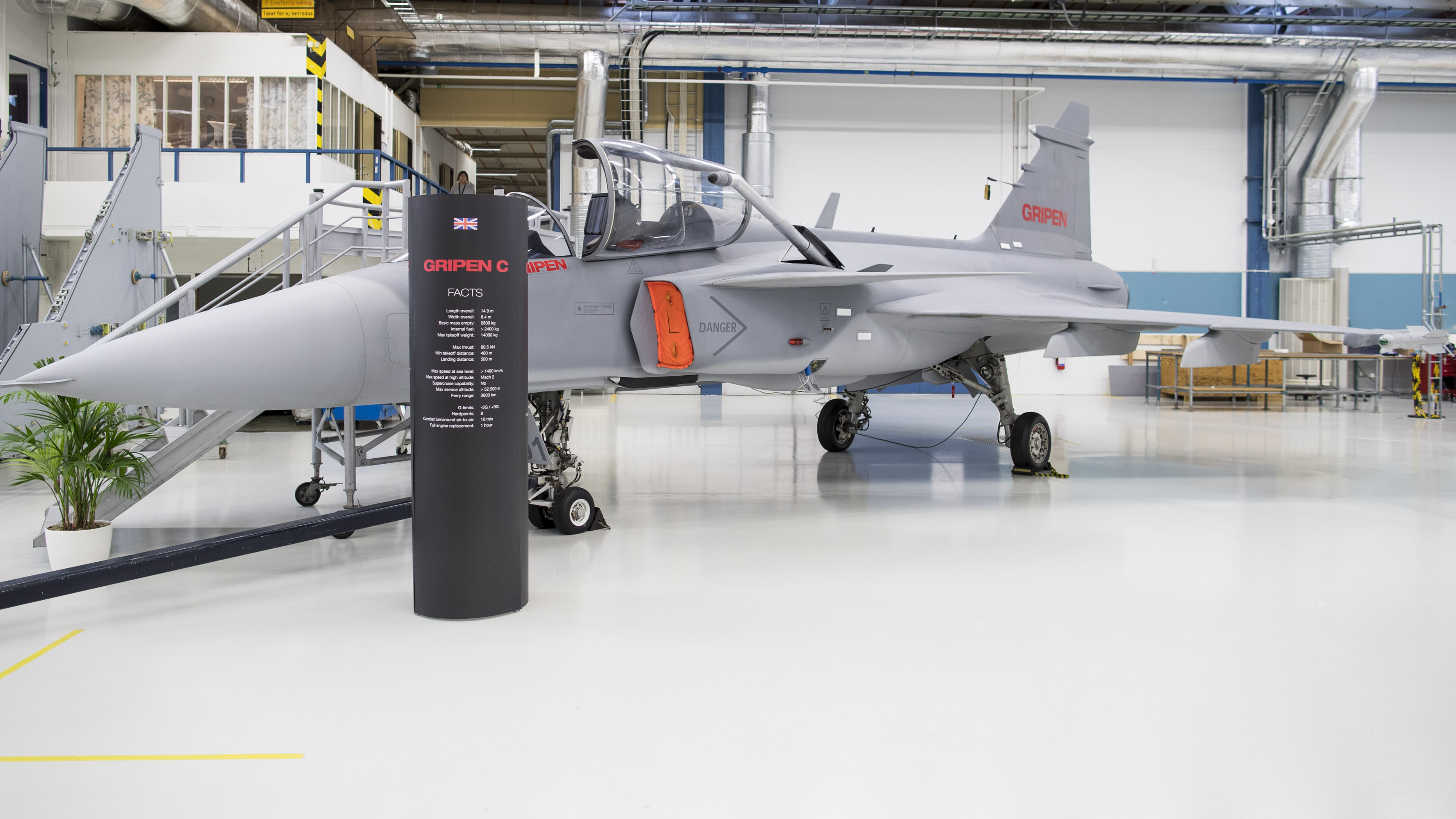
Finland has done quite a few quite a lot of them coming practicing and procurement with Sweden and I think this might be the way to go about it with the Baltic states as well. For example the Baltic States have next to nothing in the Air Force department and Finland is right now looking it to replace the F/A-18C fighters the next decade or so.  One of the strongest and maybe THE strongest contender is the JAS-39E Gripen NG. So maybe the Baltic States could to take part in this program and get themselves a few fighters as well Finland is going to get around 60 to 100 planes maybe from Sweden or maybe from USA and thus it would be quite profitable for the Baltic states to get the few of their own.  Training could be done in Sweden with their facilities for all five nations, and thus save money in training. Baltic states could have, say 40 planes between them, and one or two bases in the area. Finland would get planes cheaper, and FINALLY get the number of planes it needs to protect the aerospace. and Sweden would sell a hell of a lot more planes and stores. So win-win-win situation.

Other area where co-operation would be quite very easy would be to cooperate is the procurement of naval vessels. Finland is now looking into purchasing new class of ships that might be suitable for use for Baltic States Navies as well. This of course would be good for everybody concerned not least for Finland as larger batches and greater number of vessels would drive the unit costs down and thus enable Finns to get eight ships they needed instead of four to six  planned.  One does realize that NATO has earmarked Baltic Navy’s to do NATO counter mine work which is, of course, among the bread and butter for Finnish Navy as well.  So there would be another area that cooperation could be easily done between feeling under an import with Baltic States and Sweden of course. Possibility to take part in Sweden’s procurement of u-boats could water some mouths as well.

These airplanes could function as nucleus of  broad co-operation, Air Force and training could be done in Sweden and Finland or in other Nordic NATO countries but this would be an easy way for, Estonia for example, to start acquiring of  Air Force or her own.

 So, What are we really waiting for?

Posted in Baltic situation, HX-ohjelma, ilmavoimat, merivoimat, NATO jäsenyys, Sodanajan toiminta, Suomi ja Ruotsi, TurPo, War in Baltic Region | 1 Comment